
Primal Scream, Andrew Weatherall and the making of an era-defining album in Screamadelica

In the summer of 1991, British guitar music was supposed to be on its last legs. Acid house had detonated the old indie template, rave culture had redrawn the social map, and the dancefloor seemed infinitely more compelling than another three-minute guitar song. Into this moment stepped Screamadelica, an album that didn’t so much bridge rock and dance as dissolve the distinction entirely.
Its creation hinged on an unlikely alliance: Primal Scream, a band adrift after two underperforming albums, and Andy Weatherall, a DJ-producer, steeped in dub, who had rarely been in a recording studio. The mythology begins with a 12-inch single. In 1990, Primal Scream released I’m Losing More Than I’ll Ever Have, a Stonesy track from sessions for their third LP. It landed politely and vanished quickly. Andy Weatherall heard something that no-one else had noticed.
Weatherall’s remix, retitled Loaded, stripped away the band performance almost entirely. In its place he layered a looping drum break from an Italian bootleg of Edie Brickell’s track What I Am, a Peter Fonda dialogue sample from The Wild Angels, vocals from The Emotions, a seven second sample from the original track and Bobby Gillespie singing a line from Robert Johnson’s Terraplane Blues, all driven by insistent bass pressure. What remained of Primal Scream floated like memory over a rave pulse. It was less a remix than a reconstitution.
Bobby Gillespie said: “Loaded just exploded on dance floors across the country. Looking back, it definitely caught something of the time. That was down to Andrew. All I can say is that the experience of standing in a club and seeing people go wild to it was something else. Kids would come up and hug you afterwards.”
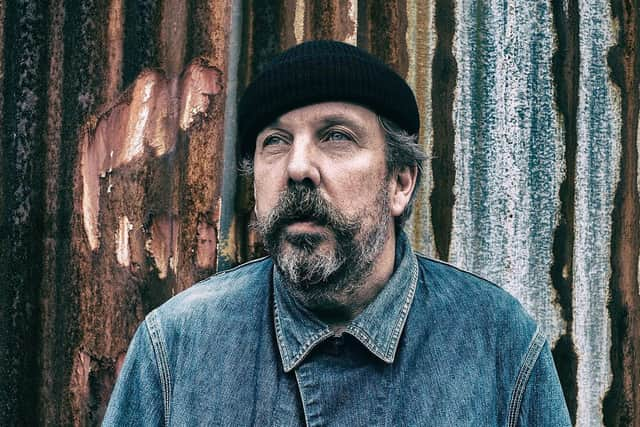

Loaded didn’t just reframe the band; it reframed the possible. Gillespie, who had spent the 1980s triangulating between the Byrds, the Stones and Scottish indie, suddenly recognised a future in which Primal Scream could be collaborative and rhythm-first. Weatherall, for his part, saw in the band a vehicle for psychedelic narrative: songs as environments rather than performances. The success of the single gave them leverage with Creation Records boss Alan McGee to rebuild the album around this new axis.
It would be at Jam Studios in London’s Finsbury Park where Screamadelica would be recorded by Primal Scream. Weatherall and engineer Hugo Nicolson constructed tracks from drum machines, live percussion, bass loops, tape edits and found sound. The Roland TR-909 sat comfortably beside gospel choirs; tambourines and handclaps locked to sequenced kicks; guitars appeared not as riffs but as texture, tremolo and shimmer.
Come Together is the album’s spiritual centrepiece, an expansive, 10-minute track influenced by Chicago house and dub. Denise Johnson’s vocals completed the vision. The track’s longform structure with breakdowns, rebuilds, and dubby dropouts owed more to DJ logic than rock arrangement.
Higher Than the Sun is the record’s most radical gesture. Weatherall submerged Gillespie’s vocal in echo, stretched chords into horizon lines and let bass notes bloom and decay like distant signals.
By release in September 1991, Screamadelica felt less like a genre crossover than a cultural document. “A new language has been created here,” said Melody Maker’s Steve Sutherland. The album normalised the DJ-producer as band member. Andy Weatherall never again made a record quite like it, perhaps because Screamadelica was the product of a singular alignment.
He would go on to produce for Saint Etienne and remix the work of the Orb, New Order, Manic Street Preachers and My Bloody Valentine. He was a DJ with a deep and abiding connection to Glasgow, a regular at Sub Club and Melting Pot club nights at The Admiral.
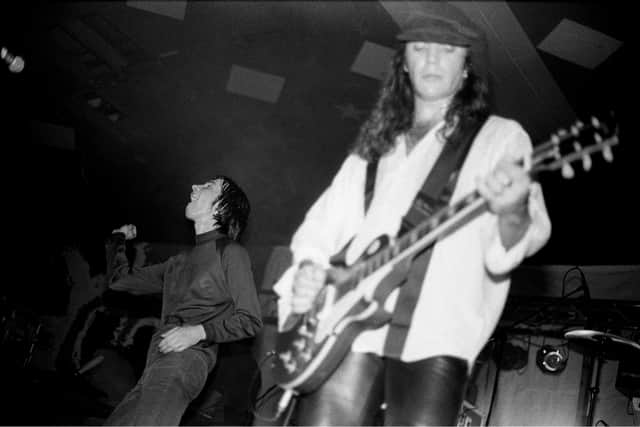
Primal Scream frontman Bobby Gillespie told The Guardian in 2020: “For Screamadelica, we gave him tracks and tracks of melodies and songs, loads of stuff that he put together somehow. His skill at arranging was off the scale. No one else would have thought of constructing tracks like he did, arranging our melodies and music into abstract pop songs.
“I think he was an outsider artist in a way; he preferred being on the margins doing his own thing. He could be more free out there. Music was a portal for him to escape the straight life. He made music and he loved music – rockabilly, garage rock, reggae. He was into spreading the word. He was inclusive, such a generous guy. I think of him as a true bohemian.”
Speaking to the NME in 2011, Andrew Weatherall said of Screamadelica: “Looking back, my arrogance makes me wince, but I would never have had the confidence to do it if I didn’t have that kind of attitude. In a few months I’d gone from basically bumming around to all of a sudden being part of a proper scene. I was at the centre of the cyclone and loving it.”