

Glasgow is a city where architecture tells the story of its people and identity. Walking through its streets, you encounter a dialogue between centuries - medieval spires, Victorian grandeur, modernist experiments, and bold contemporary designs all jostling for attention. Each era brings an opportunity for reinvention, adding another layer of landmarks to the cityscape.
The affection Glaswegians feel for local landmarks are tied to memory and meaning: red sandstone tenements from childhood, university cloisters, grand civic buildings, curious city centre constructions, markers on favourite streets.
Part of what makes Glasgow’s architecture interesting is its variety. Charles Rennie Mackintosh’s visionary works, brutalist interruptions to the flow of Victorian and Georgian rows, old buildings reflected on the glass veneer of modern towers.
In recent years, conversations around Glasgow’s built environment have also highlighted the importance of preservation and regeneration.
While many important structures face challenges, there remains a sense of collective determination to protect the buildings that matter. Our built heritage deserves more care and attention. Glasgow is in danger of succumbing to the featureless onslaught of generic modernity. So much of the city’s sense of identity is wrapped up in the landmarks that have become emblems for Glasgow. They should be cherished and remain a part of local life.
Here are 25 of Glasgow’s favourite buildings, as suggested by our readers and writers, that best represent the city.
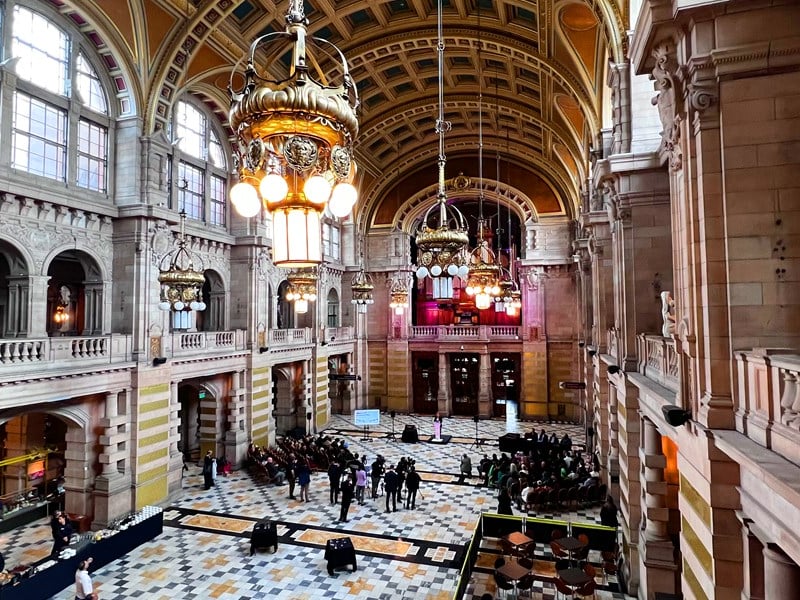
1. Kelvingrove Art Gallery and Museum
Generations of Glasgow kids have slid across the marble floor of the Centre Hall on their knees, beneath the grand pipe organ that is still used for lunchtime recitals. Built in a Spanish Baroque style, exhibits include outstanding artwork by Monet, Renoir and van Gogh. It opened in 1901, for the Glasgow International Exhibition – taxi drivers will tell you the building is the wrong way round but that’s an urban myth. Visit to see a Spitfire suspended from the ceiling above a stuffed elephant, furniture by Charles Rennie Mackintosh, collections of armour and the enigmatic presence of Salvador Dali’s Christ of St John of the Cross. | Glasgow Life
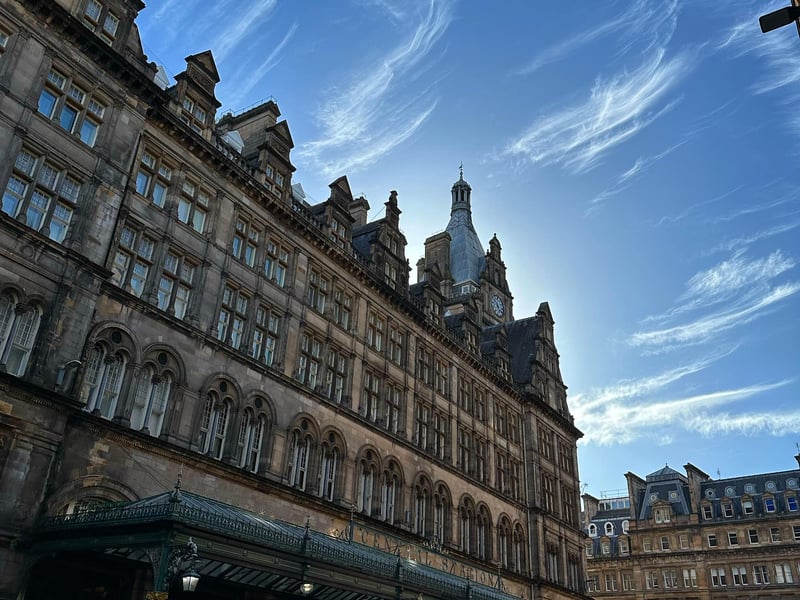
2. Glasgow Central Station
Glasgow Central Station was opened by the Caledonian Railway in 1879 on the north bank of the Clyde. As well as being the busiest train station in the city it is a landmark in its own right, including the Heilanman’s Umbrella canopy over Argyle Street, so named because displaced highlanders would arrange to meet up there at weekends. The first long distance television pictures transmitted in the UK were sent to Central Station in 1927. The station tour takes you through subterranean passageways beneath the streets to visit railway vaults connected to Glasgow’s industrial expansion. | Paul Trainer
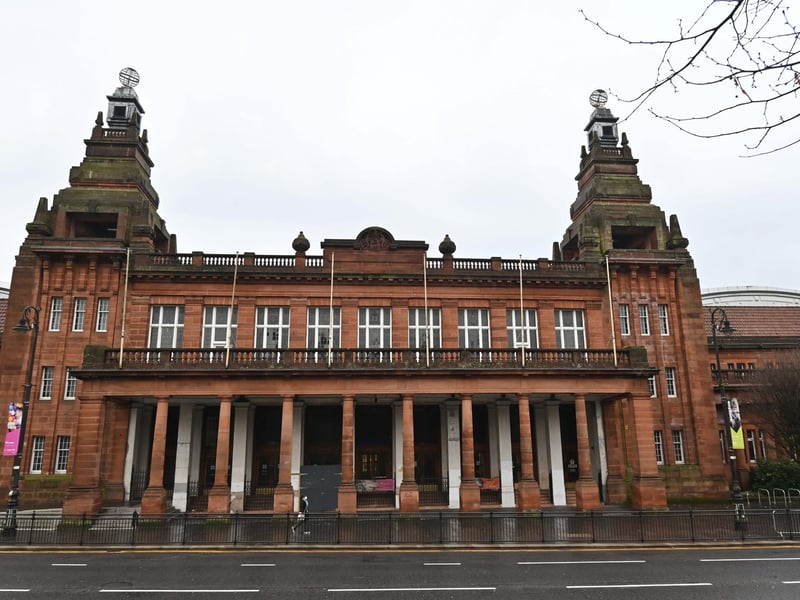
3. Kelvin Hall
A building that has lived many lives. Currently home to collections from National Library of Scotland and The Hunterian, as well as a sport facility and a television production studio. Originally built in 1926 to host large scale exhibitions, during the Second World War, Kelvin Hall was converted into a factory for barrage balloons. It was the Museum of Transport from 1987-2012 and a gig venue for the likes of Ella Fitzgerald, Elton John and The Kinks. Photo: John Devlin
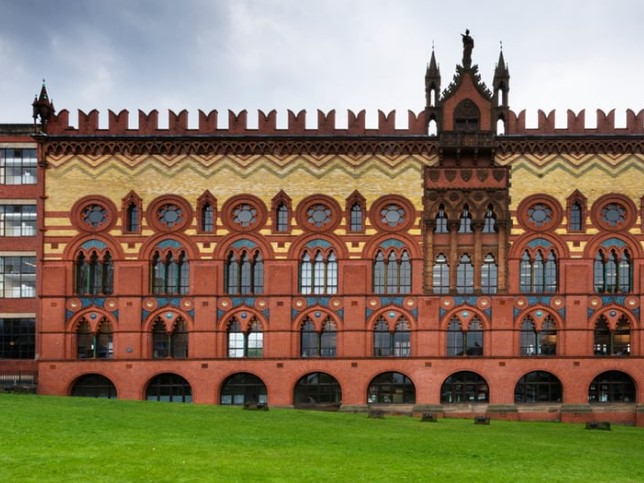
4. Templeton on the Green
One of the city's great buildings, now converted to flats and office space. Templeton Carpet Factory opened in 1892. After repeated design proposals had been rejected by Glasgow Corporation, James Templeton hired the famous architect William Leiper to produce a design that would be so grand it could not possibly be rejected, so the building was modelled on the Doge's Palace in Venice. West Brewery is based there. | Contributed