
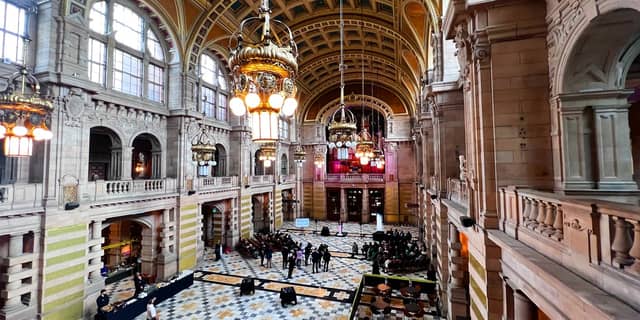


Glasgow is a city where architecture tells the story of its people and identity. Walking through its streets, you encounter a dialogue between centuries - medieval spires, Victorian grandeur, modernist experiments, and bold contemporary designs all jostling for attention. Each era brings an opportunity for reinvention, adding another layer of landmarks to the cityscape.
The affection Glaswegians feel for local landmarks are tied to memory and meaning: red sandstone tenements from childhood, university cloisters, grand civic buildings, curious city centre constructions, markers on favourite streets.
Part of what makes Glasgow’s architecture interesting is its variety. Charles Rennie Mackintosh’s visionary works, brutalist interruptions to the flow of Victorian and Georgian rows, old buildings reflected on the glass veneer of modern towers.
In recent years, conversations around Glasgow’s built environment have also highlighted the importance of preservation and regeneration.
While many important structures face challenges, there remains a sense of collective determination to protect the buildings that matter. Our built heritage deserves more care and attention. Glasgow is in danger of succumbing to the featureless onslaught of generic modernity. So much of the city’s sense of identity is wrapped up in the landmarks that have become emblems for Glasgow. They should be cherished and remain a part of local life.
Here are 25 of Glasgow’s favourite buildings, as suggested by our readers and writers, that best represent the city.
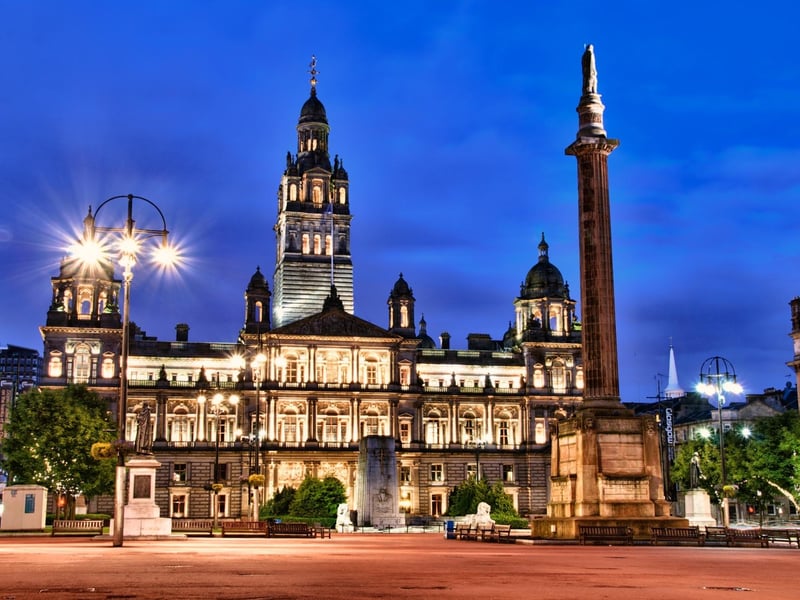
5. City Chambers
The headquarters of successive councils since 1889, City Chambers looms large over the eastern side of George Square. Public tours are conducted twice a day. Its marble staircase is the biggest of its kind in the world and has featured in films as a stand in for the Kremlin and the Vatican. The Banqueting Hall is where figures including President Ulysses S Grant, Marie Curie, Nelson Mandela and Sir Alex Ferguson were given the Freedom of the City. The walls are decorated with murals by artists including Sir John Lavery, Alexander Roche and George Henry. Photo: Jim Nix
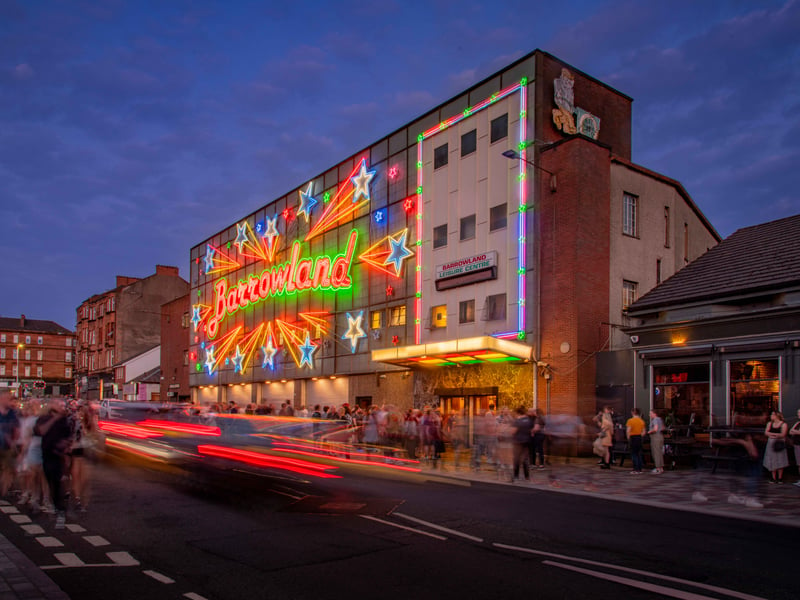
6. Barrowland Ballroom
The best venue in the world. This is not hyperbole, it is a fact. You can’t build a place like this, it has to emerge over time, seasoned by all has happened under the starry roof of the Barrowland Ballroom. The building itself is a kitschy wonder. The sign at the front has become an emblem for the city. | Glasgow Life
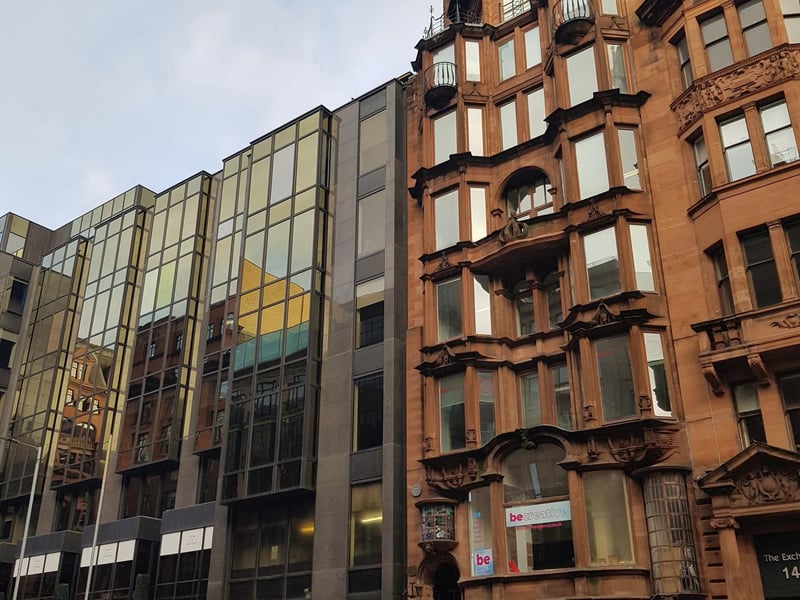
7. Hatrack Building
The Art Nouveau Hatrack building, built in 1899 and the groundbreaking, idiosyncratic work of architect James Salmon II. This thin wedge of creative form sits quietly between the old and the new on St Vincent Street. St Vincent Street is named for the Battle of Cape St Vincent in 1797, one of the opening battles of the conflict with Spain as part of the French Revolutionary Wars, where a British fleet under Admiral Sir John Jervis defeated a superior Spanish fleet under Admiral Don José de Córdoba y Ramos off the coast of Portugal. A stained glass window by Oscar Paterson depicting galleons in this sea battle is a feature above the doorway at one of Glasgow city centre’s most distinctive buildings. Ten storeys tall but less than thirty feet wide, it’s often overlooked. Photo: Contributed
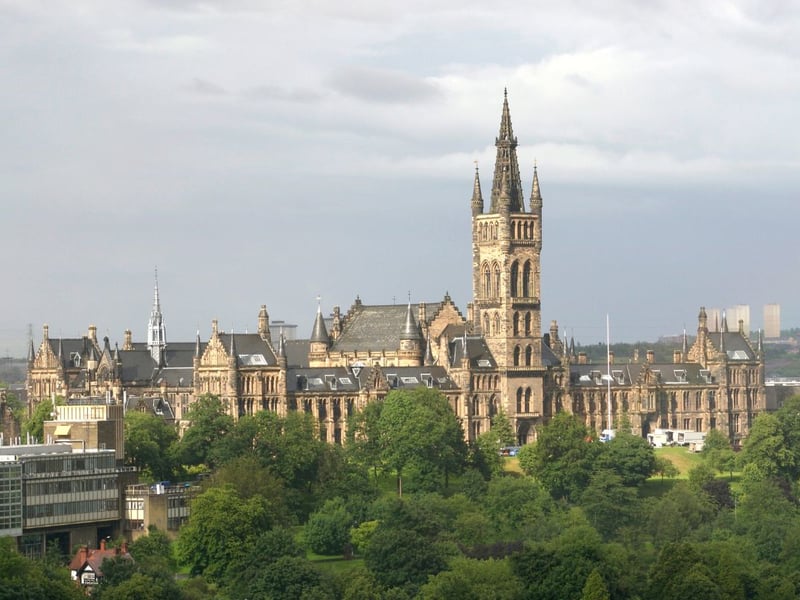
8. Gilbert Scott Building
At the centre of Glasgow University's Gilmorehill campus lies the stunning Gilbert Scott Building, with its distinctive bell tower, one of Glasgow’s most notable landmarks. It is named after its designer Sir George Gilbert Scott, a leading figure in the Gothic Revival movement who designed many of the University’s buildings in the late 19th century. Sir George died before the building was finished, but his son John Oldrid Scott, a famous architect in his own right, completed the building in 1891, including the tower, which stands 278 feet high. | Canva/Getty Images