
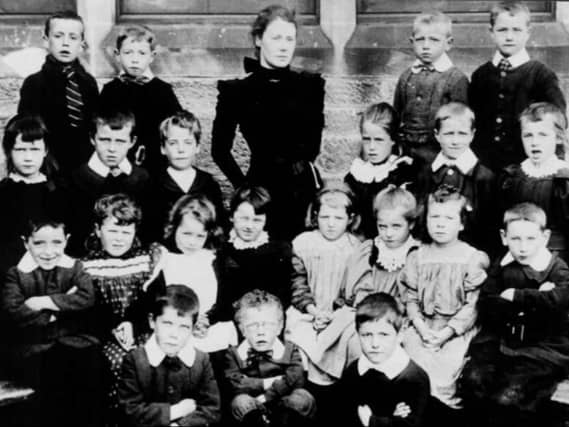


Bishopbriggs - a town that has been claimed by Glasgow, Lanarkshire, and East Dunbartonshire throughout it’s long and storied history - today we wanted to take a closer look at the heritage of the town through some old photographs.
Historically a part of Lanarkshire, the area was also once a part of Cadder, a smaller village that would eventually be absorbed by the town. The town takes it’s name from the Bishop of Glasgow, who was granted the lands by King William the Lion in 1180 - the brigs part refers to the bridges. In the 18th century the town was even referred to as ‘Bishopbridges’.
The history of the town stretches even farther back than that though, as Cadder was a Roman fort along the Antonine Wall - the earliest reference we have to the town of Bishopbriggs itself however can be found in 1568, when reference was made to a path north of Glasgow as the ‘common passage to Bishopis Briggis’.
When the industrial revolution came, Bishopbriggs was initially a little slow on the uptake - leading to fears that the town would be absorbed by the rapidly expanding Glasgow. While this never happened as Bishy adapted to manufacturing, publishing, and other industries, 2000 acres of land around Cadder were absorbed by Glasgow in 1926, which would become Milton from the late-1940’s onwards.
Here’s the story of life in Bishopbriggs in the 20th century, the era in which the town came into its own - evolving from a small rural village into a thriving urban town.
These pictures were supplied via the East Dunbartonshire Council archives and collections - to find more old pictures and stories from your local history, check out their online catalogue of historic images.
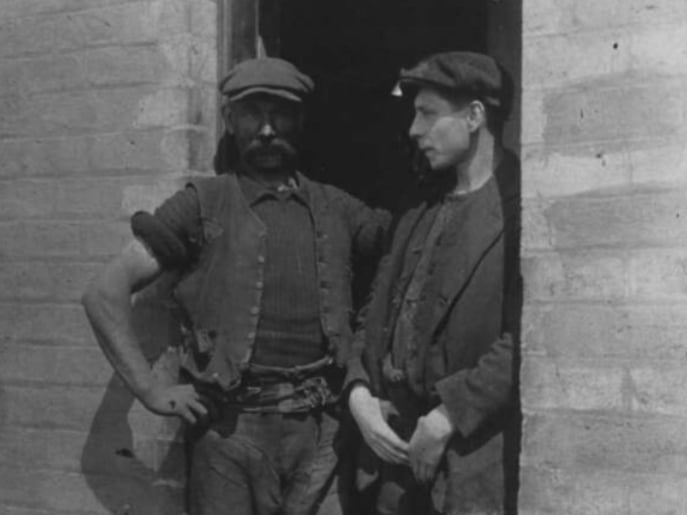
5. Cadder Miners (Circa. 1915)
James Neilly and his son, William Neilly, Cadder miners who lived in cottages at Jellyhill near Bishopbriggs. | East Dunbartonshire Council
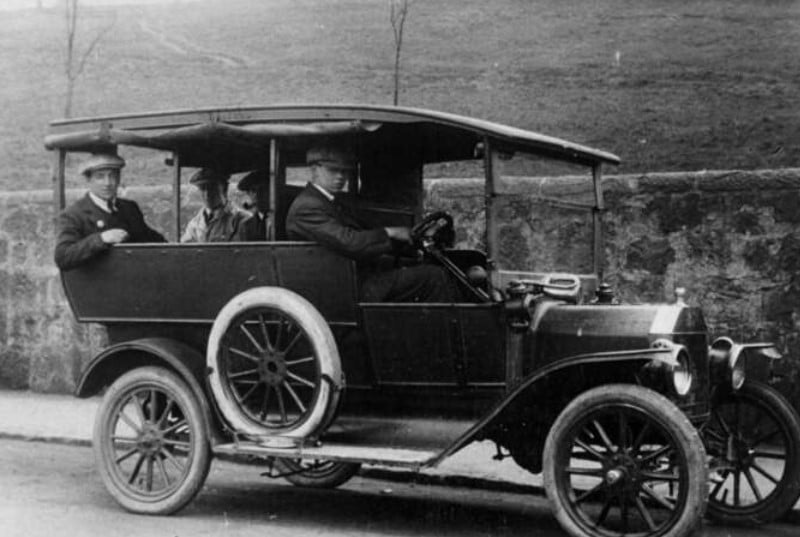
6. Graham’s (1916)
Graham’s early passenger vehicle - pictured waiting at foot of West High Street for passengers from Bishopbriggs. The driver is Duncan Nicol. | East Dunbartonshire Council
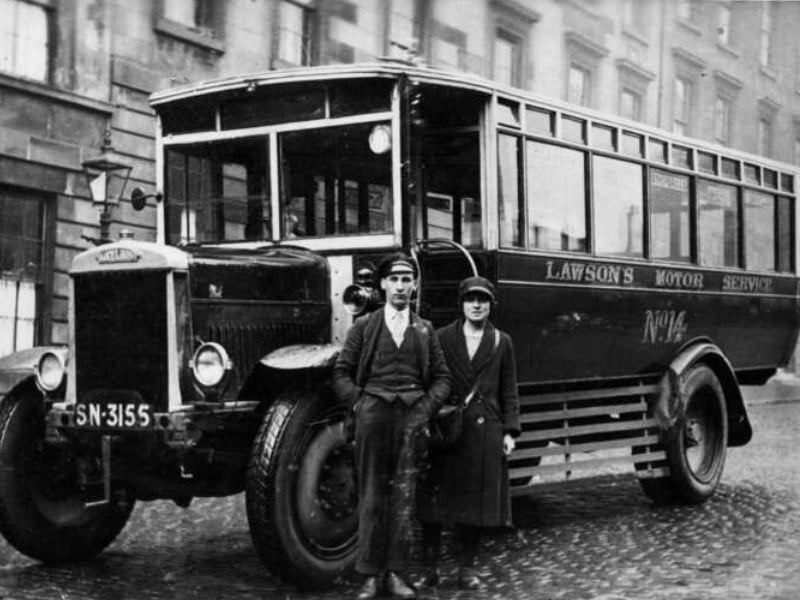
7. The No.14 to Glasgow (Early to mid 20th century)
Lawson’s Leyland No. 14, the Glasgow-Bishopbriggs-Kirkintilloch service, pictured is driver W Carson. Before the days of switchboards on the front of the vehicle, buses were entirely dedicated to single routes - you can see that in the embossed No.14 on the side of this old motor bus. Given a few decades or so, advancements in motor technology would lead to the bus overtaking the tram as the preferred method of public transport. | East Dunbartonshire Council
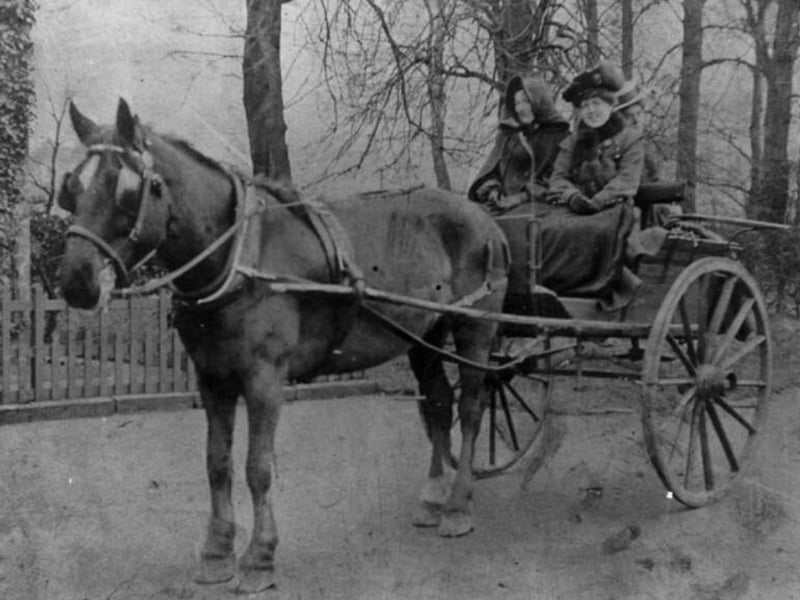
8. Dog Cart (Early 20th century)
Other modes of transport before the likes of so-called ‘motor vehicles’ included the dog cart (drawn by a horse, we promise the animal pictured isn’t just a big dog) which had two wheels, space for 4 passengers, and a whopping 1 horsepower. | East Dunbartonshire Council