

Here in Glasgow we love a blether. We love to reminisce on the good old days - the school days. That’s why it’s so difficult to see so many of our schools in the city lie derelict, or worse yet, demolished.
But why are so many of our old schools left to rot? We set out to examine the life and deaths of these schools through five case studies on Glasgow schools in their local communities.
The UK Government introduced the 1872 Education (Scotland) Act in 1872, which made schooling free and compulsory for 5-13 year olds. To keep up with the massively increased demand for schooling, the School Board ofGlasgowbuilt 75 schools from 1874 to 1916.
The 19th-century education act also transferred the ownership and management of the schools from church to state.
Of the 75 schools built in this period, less than a dozen remain as schools in the city - with the rest being demolished, vacant, or being used for different purpose, such as accomodation.
In the late 20th century a major re-organisation of school provision came about, brought on by falling birth rates, population migration and declining school rolls throughout the city - which led to the immediate closure or eventual closure of many schools in Glasgow.
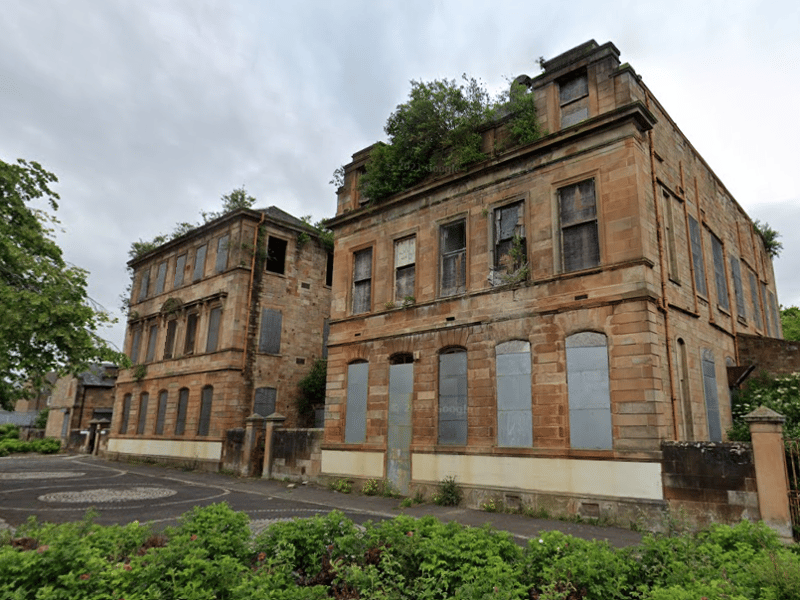
1. Tureen Street School
Tureen Street School in Calton was a primary school designed by Glaswegian architect John Honey and finished construction in 1875. The beautiful building is unique looking to say the least, built out of yellow ashlar stone, it has fallen into disrepair since it’s closure. | Google Maps
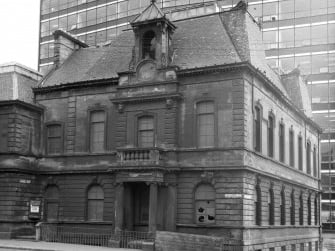
2. Allan Glen’s School
An incredibly prestigous school in it’s day - most students attending Allan Glen’s School had to pay a fee. The foundation of the school was the dying wish of Allan Glen, an eminent Glaswegian tradesman and incredibly successful businessman. He set up the Allan Glen Endowment Scholarship prior to his death in 1950, in his own words to ‘to give a good practical education and preparation for trades or businesses, to between forty to fifty boys, the sons of tradesmen or persons in the industrial classes of society.’ Formally established in 1853 in Townhead on the corner of North Hanover Street and Cathedral Street, the school fostered the careers of many leading Glaswegian scientists and industrialists throughout the late 19th and 20th century. | Canmore
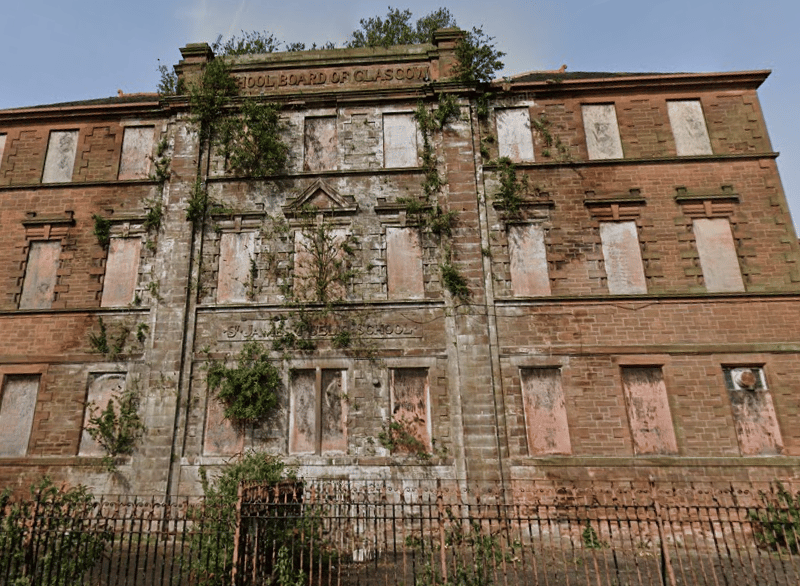
3. St James Primary School
Located just down the road from Tureen Street School in Calton, this disused school became B-listed in the 90’s for it’s imposing architecture and beautiful stonework. It was constructed in 1895 and demolished in 2009. It has seen some interest in recent years, with one planning proposal even hoping to turn it into a Gaelic school. However, the condition of the site was described as ‘very poor’ in an inspection this month (February 2023) due to water damage. In an inspection in 2013, the site condition was described as ‘very good’. | Google Maps
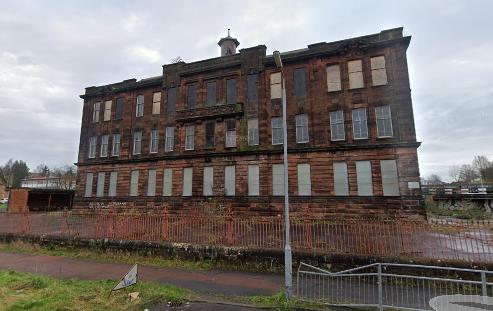
4. Sir John Maxwell School
In August 1854 following a public meeting, Sir John Maxwell provided funds to build a successful Industrial School which enabled local children to access free basic education and trade lessons specific to each gender. The school sold the children’s work from the trade lessons as well as the vegetables they grew to help raise funds. By 1906 the school was struggling to cope with the number of children requiring education and proposals were drawn up by Eastwood Parish School Board to replace the school with a new building on the same site. The school closed in 2011 | Google Maps