


When we think of the Cold War, we think of the USSR and America, spies and international espionage - but the threat of nuclear war went far beyond the scope of two countries, it was global - and just as feared in Glasgow as it was anywhere else.
In the second world war, Glasgow was a major bombing target for the Axis Powers, given it’s title of the’second city of the empire’ - we were a major contributer to the war effort, producing everything from munitions to warships - Clydebank suffered heavily under the Blitzkreig bombing campaign.
But with the advent of nuclear weapons, as explored in Christopher Nolan’s new film, Oppenheimer, we needed better protection than Anderson Shelter’s to protect the people of Glasgow from a nuclear attack.
The British Government invested a significant amount of money in preparing the country for a future conflict that some believed was invevitable.
Everything from radioactive monitoring stations to war rooms to nuclear bunkers were built to co-ordinate and protect the population should a nuclear strike occur on British soil - and Glasgow as a major urban centre was thought to be a target for the Soviet Union, alongside all other Scottish Cities.
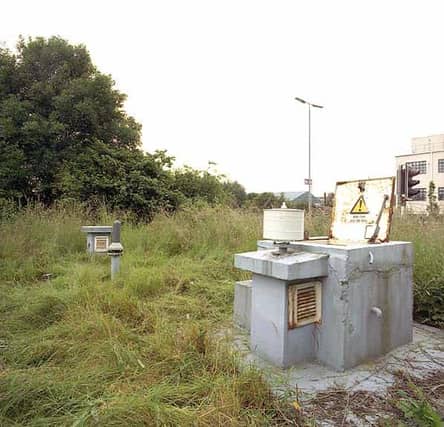
The most obvious reminders we have from these days are ROC posts - where Royal Observer Corp volunteers manned small underground monitoring posts across Britain. In the event of a nuclear attack, Observers would hurry to the post where they would report any bomb bursts, fallout radiation levels and calculate their distance from ground zero using specialist equipment.
There were more than 1,500 monitoring posts built in the UK throughout the Cold War, it went much further than just paranoia, the threat of a nuclear war was not only feared, but anticipated by Western Governments.
Other noteable monitoring sites around Glasgow, long-since demolished, include:
Shotts ROC post, opened in 1960 and closed in 1968, situated near the 10th tee on Shotts golf course, was demolished to make way for the golfing greens and roads.
Airdrie ROC post, located a few hundred yards east of Airdreehill Road, it opened in 1959 and closed in 1991 - it was demolished, a single disused telegraph pole marks the spot.
Stepps ROC post, opened in 1960 and closed in 1968, it was demolished and buried underneath the M80 south of Lenzie Road - although the exact location of the site is unknown.
Eaglesham ROC post was located on the south side of Kirton Moor Road, it opened in 1963 and closed in 1991 - but now no trace of the post remains as it was entirely demolished.
Beith ROC Post was opened in 1960 and closed in 1968. Shortly thereafter it was demolsihed, the only evidence of the post is a ‘conspicuous mound.’
This article would not have been possible without the Subterranea Brittanica - a group that explores man-made and man-used underground places in Britain - you can take a look at their interactive map for all nuclear bunkers, bases, and monitoring stations across Scotland and the UK.
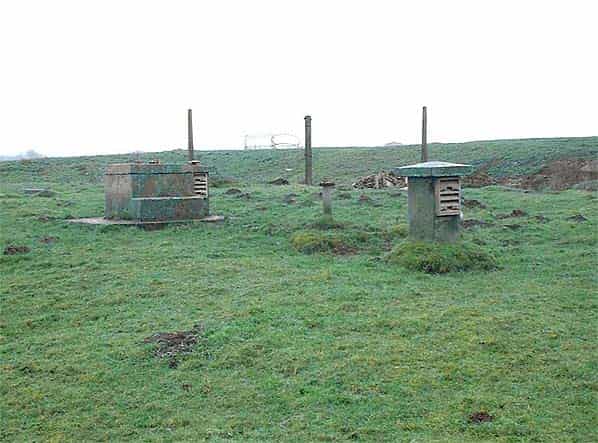
5. Kirkintilloch ROC post
All surface features remain intact although no paint remains. The hatch is locked. A metal dome on the ventilation shaft indicates that this was a master post. There is paving around the FSM pipe. The compound has large green double gates with barbed wire on top for vehicle access | John Anderson, Subeterranea Britannica
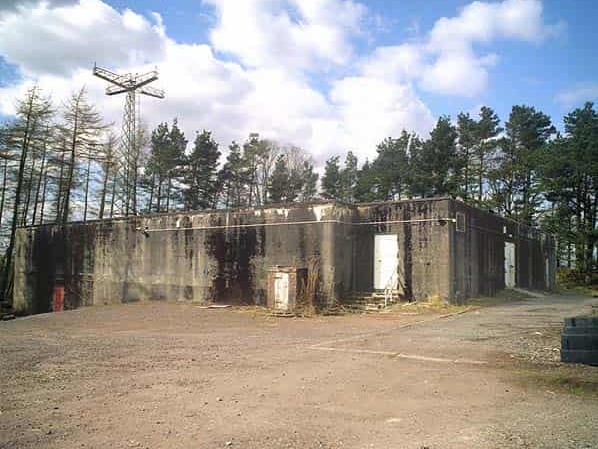
6. Torrance House Anti-Aircraft Operations Room
Located just outside of East Kilbride, Torrance House was an Anti-Aircraft Operations Room - used from the advent of the second world war right up until the 1980’s. It contained the usual operational posts of Fire, Police, Military, Health and even had a BBC studio. This building, known until 1983 as Scottish Western Zone SRC was led by the ‘Zone Commissioner’ (at one time believed to be the Lord Provost of Glasgow). | Nick Catford, Subterranea Britannica
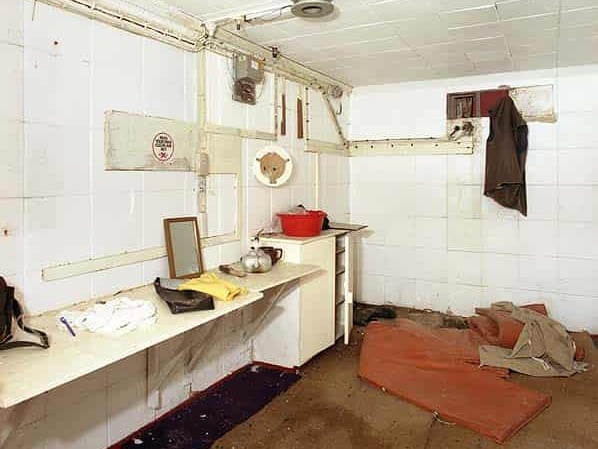
7. Bridge of Weir ROC post
The Bridge of Weir ROC post was still open upon last report, it’s likely that this was a ‘master post’ due to a metal dome near the entrance - essentially working as a relay so all ROC posts around Glasgow could link into the HQ in Ayr | Nick Catford, Subterranea Britannica
8. Carluke ROC Post
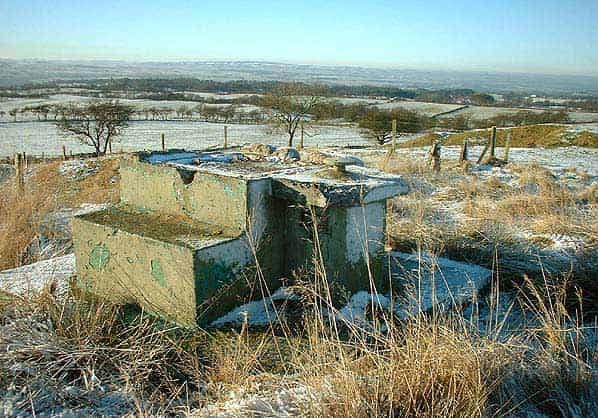
Carluke ROC Post was located in a field near the South Lanarkshire town. The hatch was capped with concrete in the late 1990’s to deter drug users who had been using the post - although most of the internals should still remain, accessible through a thin layer of concrete. | John Anderson, Subterranea Britannica