
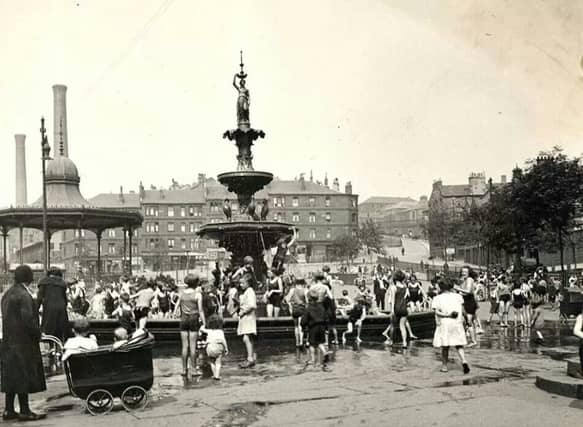


Whatever the intended benefits, the motorway reshaped vast parts of Glasgow almost beyond recognition. Entire streets were cleared, historic buildings torn down, and long-standing communities broken apart, scattering friends, neighbours, and families across the city and beyond.
In March 1945, Glasgow’s city engineer, Robert Bruce, presented his First Planning Report to the Highways and Planning Committee. His ambitious vision set out a dramatic blueprint for the city’s future — redefining how Glaswegians would live and work, how the city centre would evolve, and how movement across the city would be transformed.
Two decades later, in June 1965, Scott, Wilson, Kirkpatrick and Partners published A Highway Plan for Glasgow, establishing a comprehensive road strategy that would shape the city for generations. The inner-city section of the M8 was subsequently built between 1968 and 1972.
Neighbourhoods once dense with life — Townhead, Cowcaddens, Charing Cross, Anderston and Kinning Park — were changed irrevocably, their character and communities forever altered.
In recent days, Glasgow City Council backed plans to demolish a key stretch of the M8 at Woodside Viaducts.
Here are the Glasgow areas changed forever by the construction of the M8 in the 1960s as council backs plans for demolition.
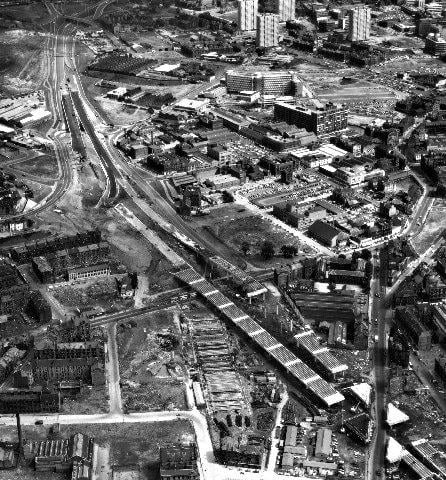
5. Townhead
Taking in historic landmarks such as Glasgow Cathedral and Provand’s Lordship, Townhead is one of the oldest parts of the city. In 1962 the decision was taken to make Townhead a Comprehensive Development Area to allow for the construction of the M8 and the expansion of Strathclyde University. A great number of streets, and ancient road layouts, including the kilometre-long Parliamentary Road, vanished in the process. Photo: Scottish Roads Archive
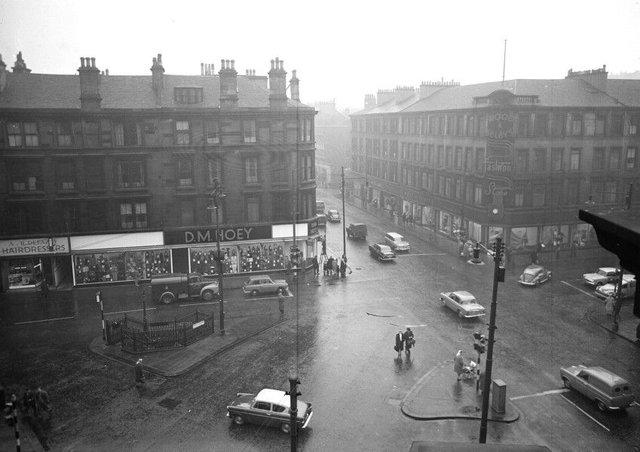
6. St George's Cross
Today, the M8 cuts a deep canyon through the heart of Charing Cross, continuing north towards another barely-recognisable old junction, St George’s Cross. Photo: TSPL
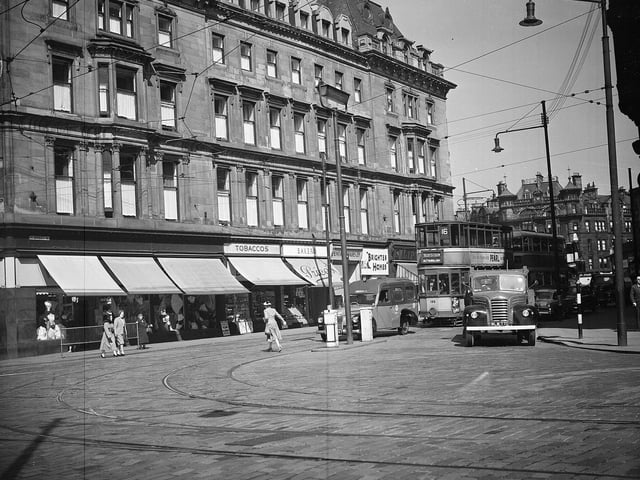
7. Charing Cross
Providing a link between Sauchiehall Street and Glasgow’s upmarket West End, the formerly bustling crossroads once boasted some of the finest architecture in the city. Photo: TSPL
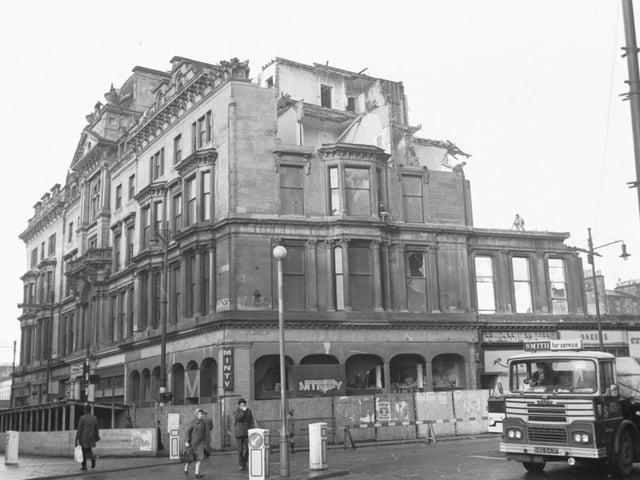
8. Charing Cross
Just west of Charing Cross Mansions was the Grand Hotel, a stunning Victorian edifice which provided the base for many a Glasgow wedding reception during its lifespan. Despite the best efforts of student activists and heritage campaigners, the Grand Hotel and hundreds of other widely-admired buildings were pulled down in the late ‘60s. Photo: TSPL