
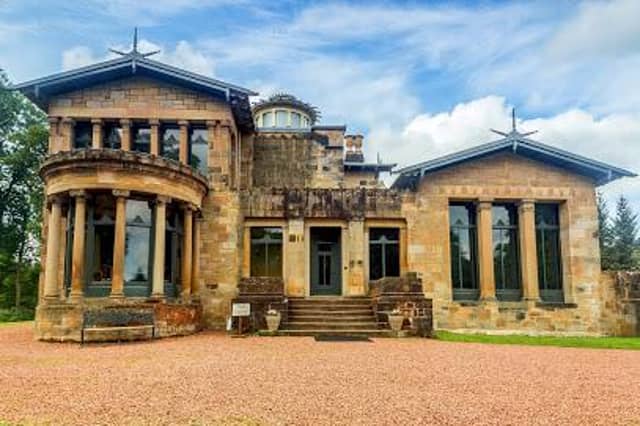


During the Victorian era, Glasgow became the workhouse of the empire as the industrial revolution saw heavy industry such as shipbuilding introduced to the River Clyde.
It wasn’t just Glasgow’s massive output of industries for the British empire that would make the city rich however, merchants profited massively from the tobacco trade - facilated heavily by slaves working on the plantations in the Caribbean and Southern America.
This involvment in trade over the Atlantic made the city of Glasgow complicit in the plundering of Africa’s resources and people - thanks to the merchants contributions to the triangular trade in the form of tobacco, of which trade routes also saw ships containing slaves, weapons and other goods of the empire.
Even though the slave trade was abolished in 1807 - 30 years before the official start of the Victorian era - it was these long-standing riches built from hundreds of years of exploitation that built the Merchant City, and then allowed Victorian Glasgow to so quickly industrialise itself when the Industrial Revolution came along.
The Victorian era is linked to the 64 year reign of Queen Victoria, from 1837 to 1901.
While the buildings may be imposing and awe-inspiring, they too are emblematic of the exploitation rampant in Victorian Society. The labour for most of these buildings were done by exploited people too - such as Glasgow Central Station, which was heavily constructed by displaced Highlanders and Islanders who were forced from their lands and crofts by the British Empire for sheep grazing during the Highland Clearances.
It would be suspicously convenient for the standing government of the time that the cleared crofters could act as cheap labour for the industrial economy that was expanding faster than people could reproduce more workers for the factorys and the construction of the great Gothic monoliths.
Working and living conditions were incredibly harsh for the lower classes in Glasgow - the stark disparity between the upper and lower classes is no more visible than in the great and terrible buildings they created. Workers in Templeton’s Carpet Factory would arrive for a shift in a workplace resembling a Venetian Palace, and then go home to a crumbling over-crowded East-End tenement infested with vermin without a toilet or running water.
It’s the Victorian architecture of Glasgow that are the most stand-out buildings that define our city on the international stage.
John Betjeman, an English writer and broadcaster, was a staunch defender of Victorian architecture in Britain. Writing in ‘Pavement in the Sun’ in 1967, Jack House gave an account of Betjeman’s first impression of Glasgow.
House wrote:”The visitor (Betjeman) was so entranced by Victorian Glasgow. ‘The headquarters of the Victorian Society shouldn’t be in London,’ he said. ‘They should be here. This is the greatest Victorian city in the world.”
As shameful as the back-story may be to these buildings, many of them remain incredible additions to the city of Glasgow and it’s people, such as the People’s Palace, Kelvingrove, and Garnethill Synagogue.
Regardless of how we all feel about our Victorian heritage, the buildings certainly tell the history of a rapidly changing and evolving city.
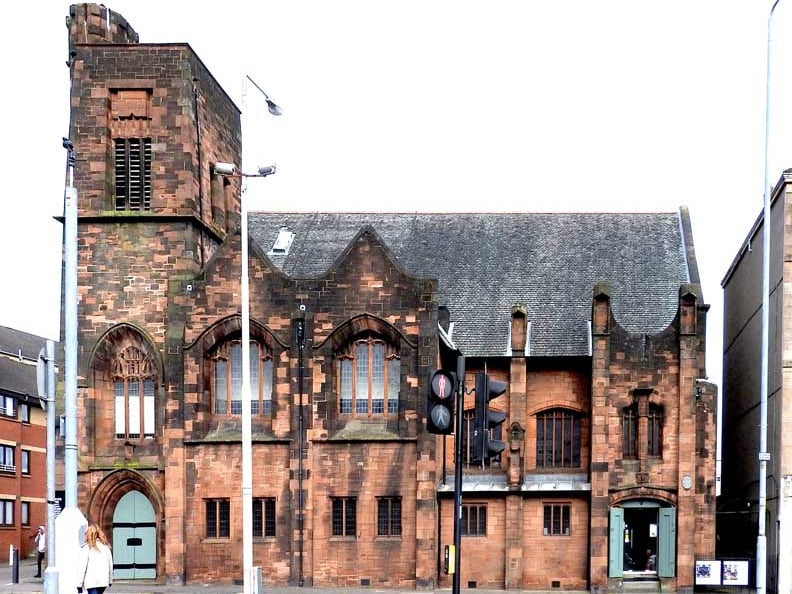
13. Queens Cross Church(1899)
The Queen’s Cross Church in Maryhill is unique in that it is the only church that Charles Rennie Mackintosh ever designed, giving it the moniker ‘The Mackintosh Church’. The design contains gothic influences, such as the magnificent stained glass blue-heart window, and pre-Reformation style elements, such as the replica of the original rood beam, which is unique in Scotland. It is even possible to find Japanese influences in the double beams and pendants inside the church. Mackintosh was a young trainee when he designed the church on the awkward corner plot of land, but it wouldn’t be long before the hungry young architect would be awarded the contract for the Glasgow School of Art (even though the church would finish construction three years after the first phase of the art school was complete) (Pic: Buffalo Architecture and History) | Buffalo Architecture and History
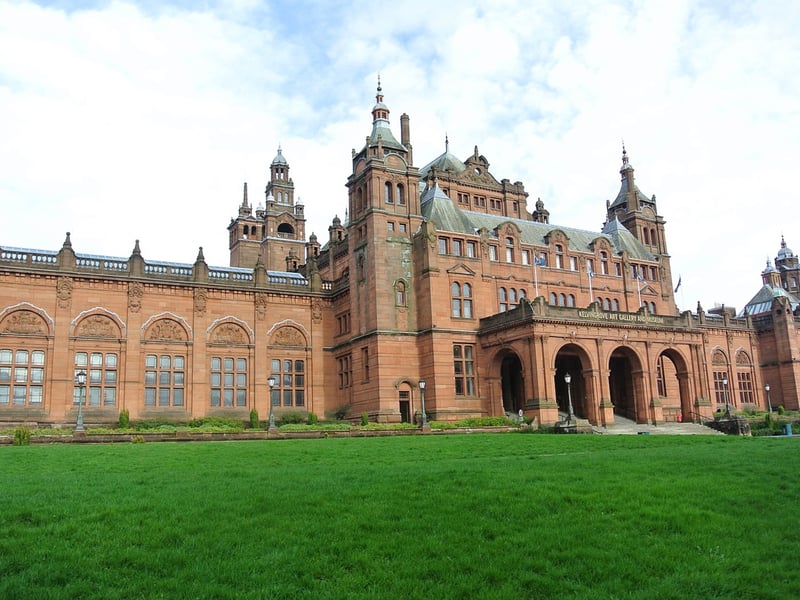
14. Kelvingrove Art Gallery and Museum (1901)
The construction of Kelvingrove was partly financed by the proceeds of the 1888 International Exhibition held in Kelvingrove Park. The gallery was designed by Sir John W. Simpson and E.J. Milner Allen, and opened in 1901 as the Palace of Fine Arts for the Glasgow International Exhibition held in that year. It’s built in a Spanish Baroque style, unique for Glasgow, but it followed the Glaswegian tradition of using Locharbriggs red sandstone. The centrepiece of the Centre Hall is a concert pipe organ constructed and installed by Lewis & Co. The organ was originally commissioned as part of the Glasgow International Exhibition, held in Kelvingrove Park in 1901. When the 1901 exhibition ended, a Councillor urged the Glasgow Corporation (now Glasgow Council) to purchase the organ, stating that without it, “the art gallery would be a body without a soul”. There’s a popular urban myth that the building was accidentally built back-to-front, and the architect jumped from one of the towers in despair upon realising his mistake. In reality, the grand entrance was always intended to face into Kelvingrove Park. | Suiscasmo
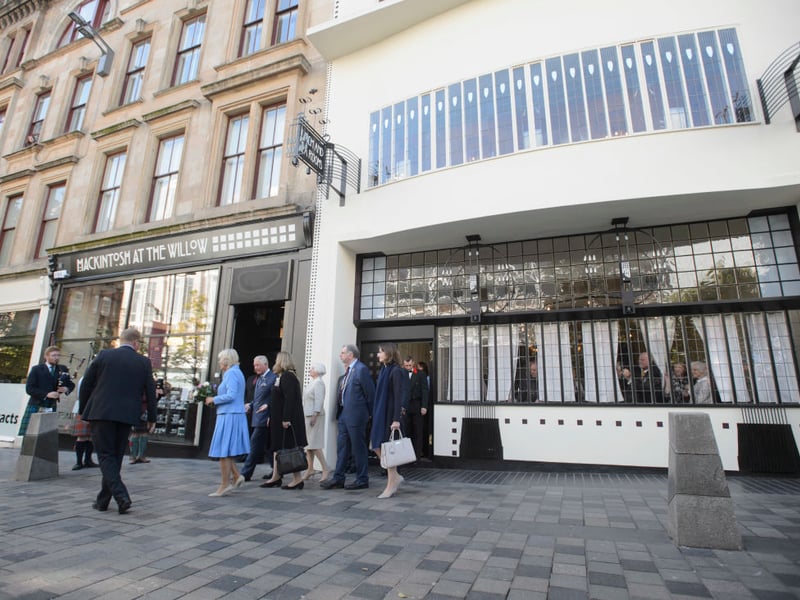
15. The Willow Tea Rooms (1903)
The Willow Tearooms opened in October of 1903 after only a year of construction. Technically this is two years after the Victorian era, but Charles Rennie Mackintosh’s design philosophy is quintessentially Victorian Glasgow that we would be amiss to leave it out. It was the fourth tearoom created by Catherine Cranston -who owned the tearooms on Buchanan Street, Argyle Street, and Ingram Street, all of which were partially designed by Mackintosh. This time though, the Glasgow architect had full-reign over the design. Ms. Cranston wanted the tearooms to appeal to every character in Victorian Glasgow, and thus set to completely redesign an old warehouse on Sauchiehall Street. They constructed five distinct rooms to appeal to different types of Victorian socialite, these include: The Front Saloon, The Back Saloon, The Gallery, The Salon de Luxe and The Billiard Room. They must have done something right, as even King Charles himself visited with Camilla, back in September of 2018. (Photo by John Linton - WPA Pool/Getty Images) | Getty Images
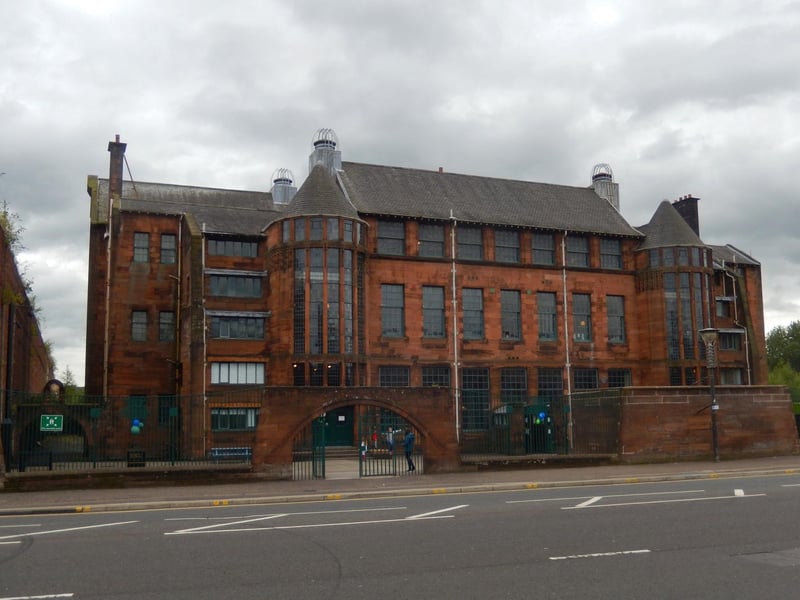
16. Scotland Street School Museum (1906)
Scotland Street School was designed by Mackintosh and now serves as a museum that Visit Scotland calls a “must-see” for fans of the renowned Scottish architect. The former school was constructed between 1903 and 1906 - slightly after the Victorian era, but still, we couldn’t leave this one out. Glasgow Life reports that the building is currently closed for a “major refurbishment”. Photo: via WikiCommons