

It wasn’t so long ago that Glasgow was a truly industrial city, with generations of factories, warehouses and worksites shaping its landscape. Many of these buildings still stand today, offering a visible reminder of the city’s past.
More recently, Glasgow entered a post-industrial era marked by rapid decline, during which countless factories were demolished. Thanks to listed building protections, however, many of the finest examples — such as the Templeton Carpet Factory — were saved for their architectural and historic significance.
These factories produced far more than the goods that left their doors. Within their walls, lifelong friendships were formed and romances began, as Glaswegians endured punishingly long hours before returning home to overcrowded tenement housing.
Industry in Glasgow was also far more varied than heavy engineering alone. Alongside engine-building were cotton textiles and related trades such as bleaching, dyeing, chemicals and textile engineering, all central to the city’s industrial identity.
Here are 12 old industrial factories and warehouses in Glasgow and what they are used for in 2026
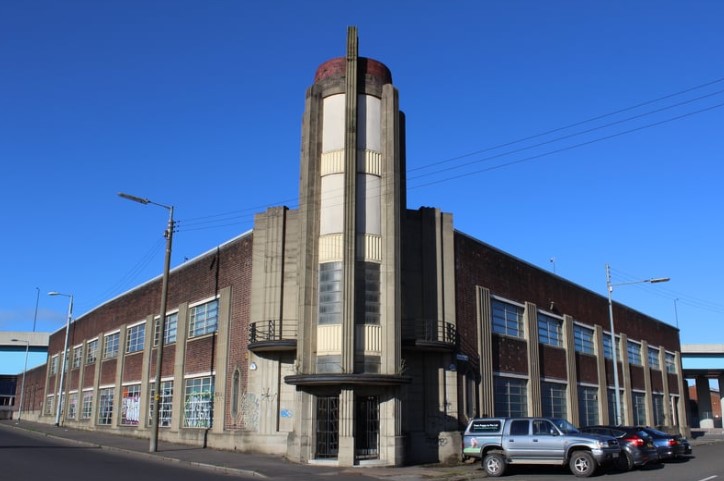
1. Leyland Motor Company Building
The Leyland Motor Company building looks like it was plucked right out of boom-time Detroit, but you can actually find the building in Tradeston. The beautiful building is one of the most unique in Glasgow, and it’s a tragedy that the building now finds itself on the Buildings at Risk register. It lies empty, after a brief period of time in use by the Strathclyde Police Mounted forces and Dog Branch as a stable block and kennel. It now lies derelict. | Contributed
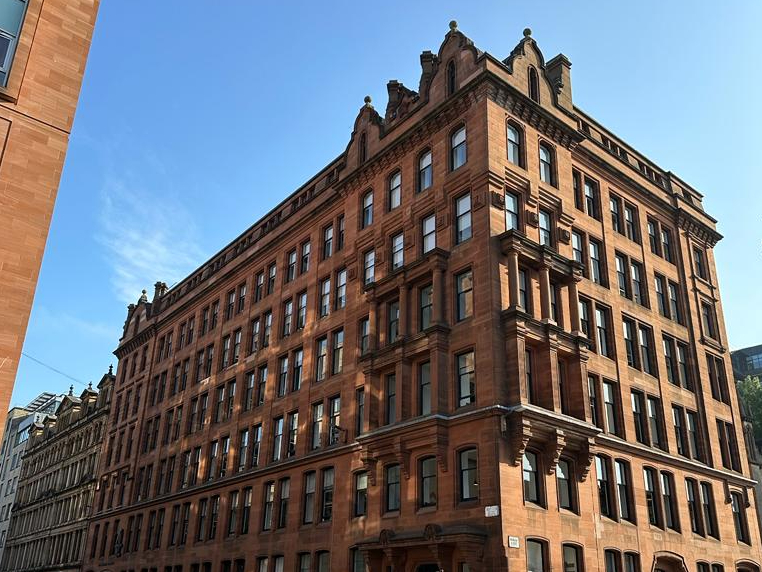
2. Merchant City Garment Factory
On the corner of Montrose Street and Ingram Street sits the Channel 4 office, a former Victorian warehouse that once held all types of textiles. According to Historic Environment Scotland, the Garment Factory was built in 1899 for J and W Campbell and Co, who were well-respected drapers and warehousemen of the era. | Contributed
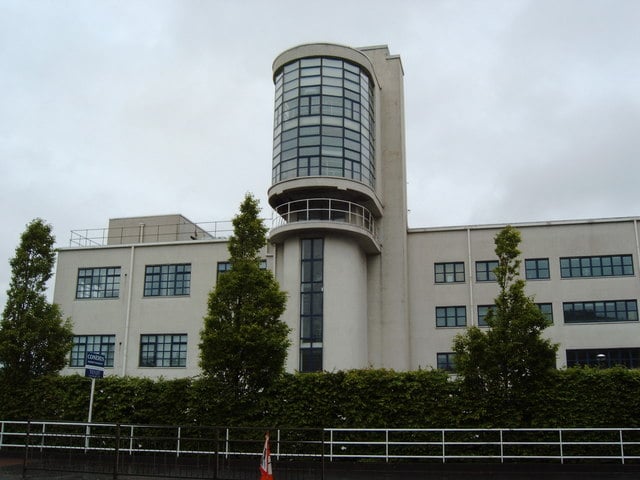
3. Luma Tower
Formerly a lightbulb factory, the design for the building is based off an art-deco headquarters for Luma in Sweden built in the 1930’s. This replica sits in Govan, built in 1938 it was the peak era for Art Deco architecture - the glass lighthouse-like structure was actually used to test lightbulbs above their brightness level to see how resilient they were. The tests would be extremely bright and would project massive beams of lights from the panoramic bay windows. After it’s lifespan as a factory, it was used for a range of purposes, including as a caravan showroom, before being restored from dereliction in the 90’s and transformed into housing. | Contributed
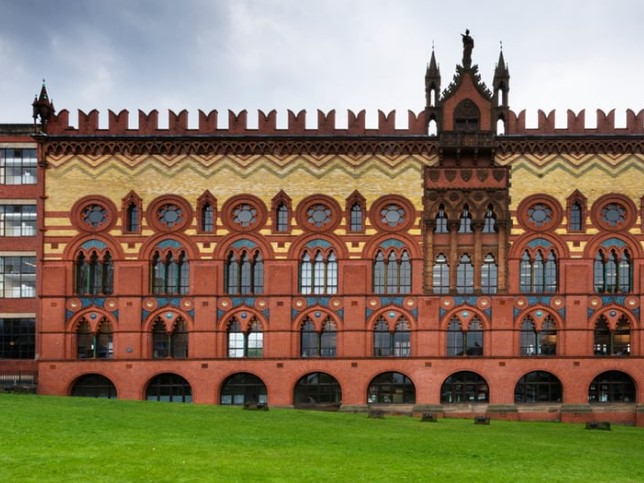
4. Templeton’s Carpet Factory (1892)
Templeton’s Carpet Factory (or Templeton on the Green as it is now known) was a purpose-built carpet factory which looks incredibly different to the industrial estate carpet factory’s you see today. It was meant to display opulence, which was a tricky thing to get right in reserved Victorian Society who preferred the imposing majesty of Gothic Revival architecture. After repeated design proposals had been rejected by the Glasgow Corporation, Templeton hired the famous architect William Leiper to produce a design that would be ‘so grand it could not possibly be rejected’, so William Leiper modelled the building on the Doge’s Palace in Venice, which was constructed in the alternative Venetian Gothic style. In 2005, the building was extensively modified in a £22 million regeneration project to form a mixed use ‘lifestyle village’. This includes 143 new apartments, accommodation for Sportscotland (the Scottish Institute of Sport), Front Page (a creative design studio) and the WEST brewery, bar and restaurant, which takes up the ground floor of the main building. | Contributed