
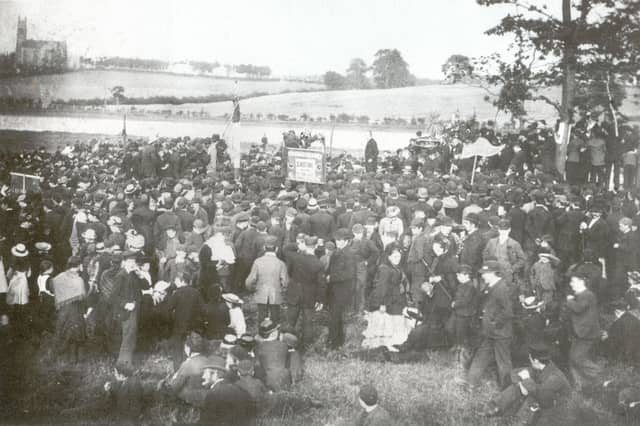


Wishaw! A town that carries many connotations, enough that the mere mention of the community’s nameto make the posher, more sheltered amongst us wince, or for those nearby towns like Motherwell or Bellshill, argue that their Lanarkshire post-code is much ‘harder’. But how many of us actually know the history of the unassuming wee town?
Wishaw has a long and storied history - so storied in fact that no one really knows where the name Wishaw comes from - some believe it to be ‘Wee Shaw’ as in the Scots for small woods or ‘Wis Shaw’ as in water woods or whisky woods in Scottish Gaelic.
Looking at it now you couldn’t really tell, but the town was once very rural with most of the area covered in woodlands - nowadays most of the nature is now penned in to areas like Coltness Woodlands or the Perchy Pond.
Wishaw grew dramatically in the 1830s, with the arrival of railways and a gas works, plus the opening of the first of many collieries around of the town. By the time the Caledonian Railway’s main line came through Wishaw in 1848 it was a major mining centre fuelling an important part of Scotland’s industrial heartland.
Wishaw was a part of the pipeline of the shipbuilding industry in Glasgow, providing coal and iron to the steel mills that would in turn send their steel to the shipyards of Glasgow. Like the rest of the hundreds of industrial towns around the UK - they were badly affected by the Thatcher era and de-industrialisation.
Want to learn more about Wishaw in the modern day? Check out our tourists guide to Wishaw, written by a local. Or if you want to learn more about the hidden history of Wishaw, check out our other article on the preserved 250-year old bog body found in the town.
Today we wanted to look at the industrial and cultural history at its peak from the early 20th century to the mid-20th century - all pictures below were supplied via CultureNL, which hosts fantastic online archive resources. To find more old pictures, archives, and stories from Lanarkshires past - visit CultureNL’s website.
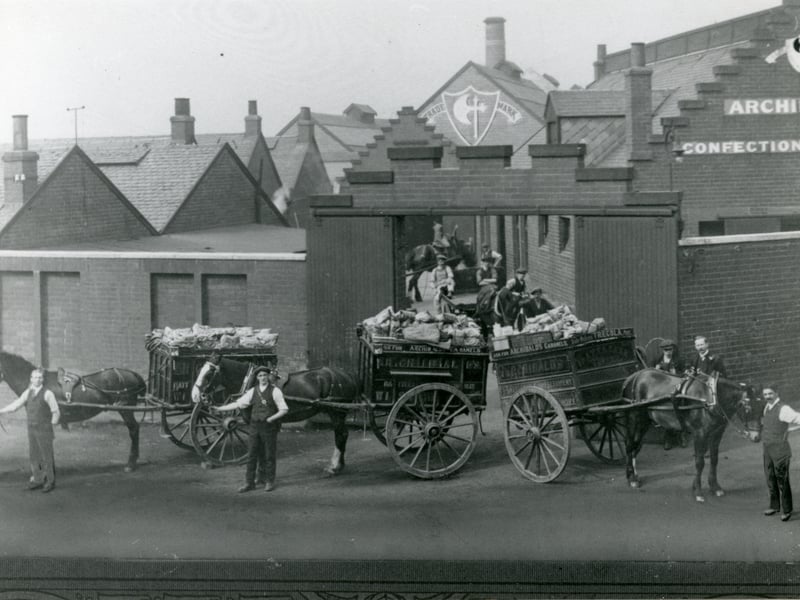
5. Archibald’s Sweet Factory (1912)
Archibalds Sweet factory in the early 20th century, confectionary factories were a massive industry in wishaw before and even alongside the introduction of the steel mills at Ravenscraig. The most famous of which was King’s, who made Oddfellows, Macaroons, Puff Candy, and Tobermory Tatties - other factories around Lanarkshire included include Kidd’s, Battleaxe, and of course, Tunnock’s - who are the only surviving factory from that era | CultureNL
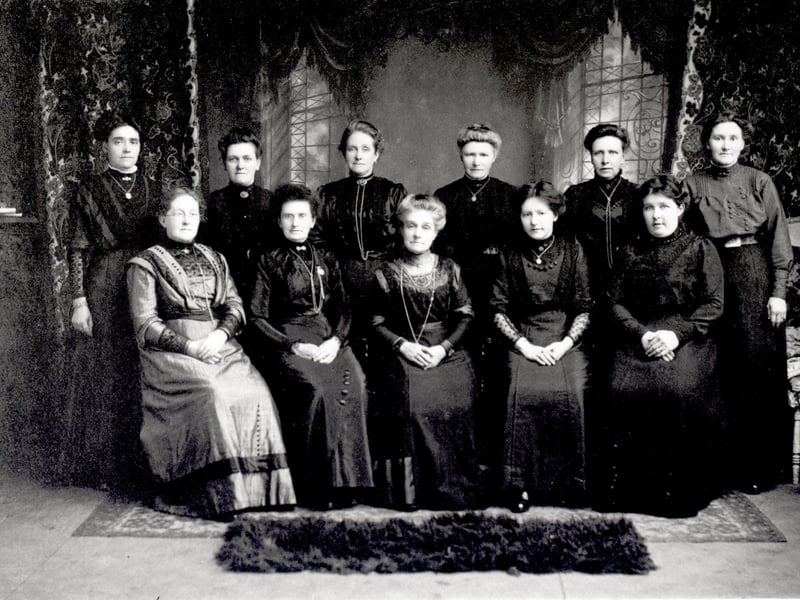
6. The Womens’ Guild (1913)
The Wishaw Co-op Women’s Guild Committee were some seriously tough women, they ran the show at home while their husbands were working in the factories, collieries and ironworks. Despite their positions of prominence in family and domestic matters, women in Scotland in the UK would not win suffrage (the right to vote on the same terms as men) until 1928 - 15 years after this picture was taken. | CultureNL
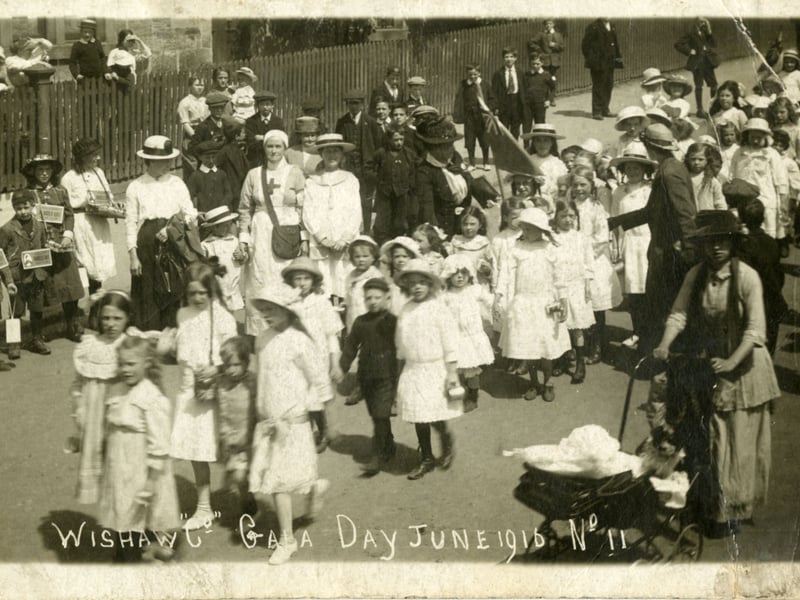
7. Girls Parade at the Gala Day (1916)
The Girls Parade in the 1916 Wishaw Gala Day would have been a solemn one, as many of the girls fathers, brothers, and other men in their life would be fighting on the western front in the first world war. | CultureNL
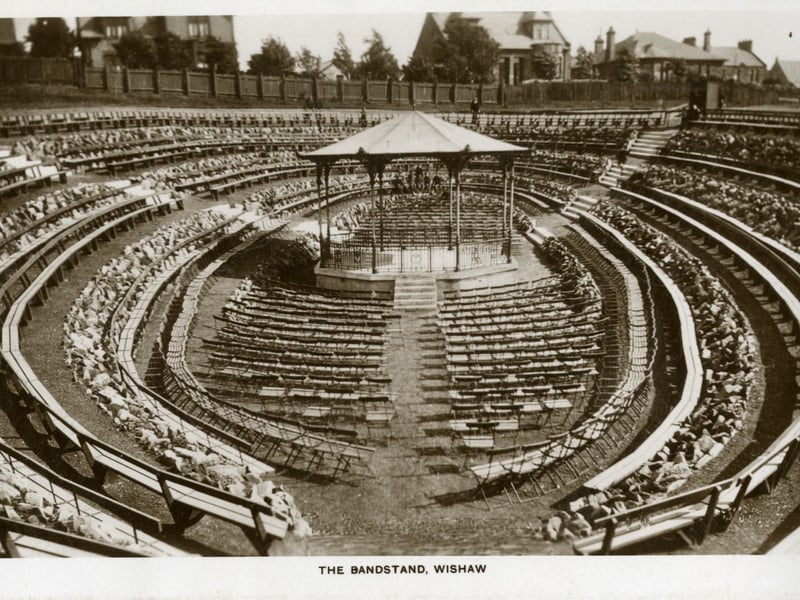
8. Wishaw Bandstand (1920)
This view of the seating around the bandstand in Belhaven Park gives an idea of the scale of outdoor events held there. The park was a gift to the town by Lord Belhaven in memory of his son who was killed during the First World War. In this era the park still had a functioning wading / swimming pool too - at least nowadays we have a skatepark and a bigger playpark, but a modern outdoor stage for live music would be incredible for the community in the modern day. | CultureNL