
The economic impact of horse racing in Scotland: why industry can no longer be viewed as 'poor relation' to England

Important data has outlined how all five racecourses in Scotland have been performing from an economic perspective
With just over two weeks to go until Ayr Racecourse stages Scotland’s biggest horse race of the season, the sport of thoroughbred champions has seen attendances increase and lead to a contribution of more than £170 million to the economy each year.
Equestrian activity in the country is once again basking in the sunshine after turning the ever-popular notion of a North/South divide firmly on its head at the Cheltenham Festival earlier this month - quite simply the mecca of Horse Racing.
Traditional talk of southern stables dominating the most lucrative prizes - particularly in the National Hunt scene - has been somewhat silenced in recent years by several noteworthy results in some of the sport’s biggest races.
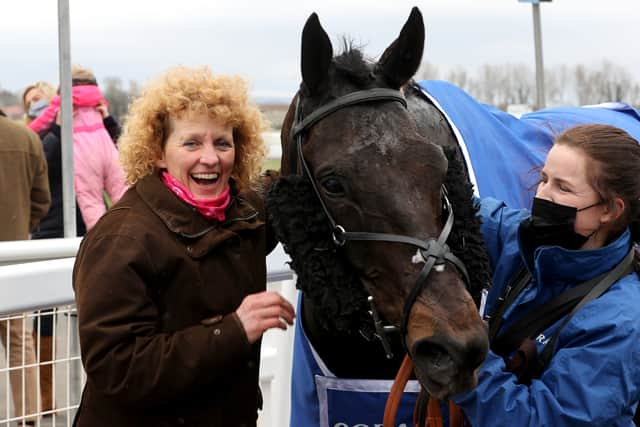

One For Arthur - trained in Milnahort, Kinross by Lucinda Russell and her former eight-time champion jockey partner Peter Scudamore - set the ball rolling back in April 2017 when he made a successful raid on jumping’s £1m showpiece Aintree Grand National. Five months later, the Iain Jardine-trained Nakeeta grabbed the flat’s prestigious £285,000 Ebor Handicap in a nail-biting finish at York.
Growing list of flagbearers' flying the saltire
Other horses including Seeyoutatmidnight (2013 Dipper Novices’ Chase), Corach Rambler (2023 Grand National), Ahoy Senor (2022 Mildmay Novices' Chase) and the ultra-consistent Euchen Glen (2021 Brigadier Gerard Stakes) have all taken the scalp of some well-fancied southern raiders in recent times to give the industry another added boost.
Those notable successes prove Scottish Racing is in rude health at present; an area of the sport once inclined to be looked upon as a ‘poor relation’ can no longer be deemed to be the case any more.
Speaking after One For Arthur’s historic victory at Aintree about Scotland’s racing heritage, Russell commented: “We have great trainers up in the north, just as good as the ones in the south. But we need big winners to attract the owners because that’s what it comes down to at the end of the day. The trainers are as good, the tracks are good and it’s a better day out for owners up here. But it’s the investment.”
Tracks report year-on-year growth
All five tracks in Scotland - Musselburgh, Kelso, Hamilton, Perth and Ayr - have reported larger spectator numbers through their gates as of 2024 and it’s hopes that upward trend can continue. There is now record prize money on offer and thousands of punters will descend on Ayrshire’s south coast in the coming weeks where another bumper crowd will soak up one of the year’s best-attended sporting events.
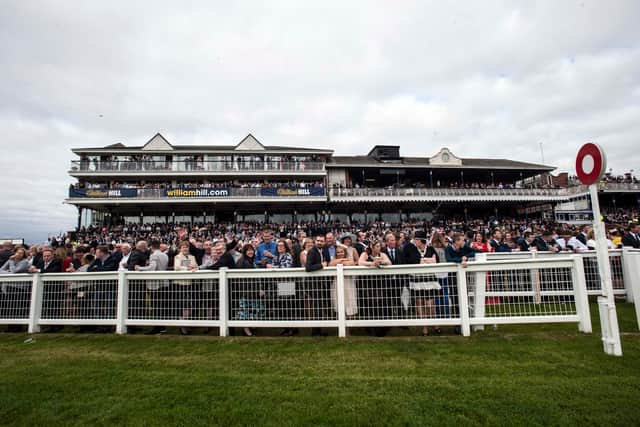
Tickets for this year’s Coral Scottish Grand National Festival have been selling like hot cakes since they went on sale 12 months ago and it’s no surprise given the success that trainers and owners in the north have been experiencing of late. The meeting begins on Friday, April 11 with Ladies Day before the main event takes place the following afternoon.
Not only are tracks promoting the sport in an positive light on social media, they are also doing a tremendous job of engaging with the wider community and introducing a new demographic of clientele through various themed race days.
According to data analysts, there were almost 400,000 paying spectators who attended the five Scottish racecourses last year - and that figure is expected to be exceeded this season. In comparison to 2015 when 310,000 punters paid their way into each venue, that’s a significant 90,000 increase.
Ayr have staged over 35 meetings throughout the year and the headline £500,000 Scottish Grand National will see up to 30 horses take on the gruelling four-mile circuit, jumping almost 30 fences in total.
Economy boost laid bare

As of 2018, the economic impact of horse racing in Scotland accounted for 3,400 jobs and a turnover of £306.3m - a rise of £301.2m since 2016. That includes the a 35 percent rise for the five racecourses in question.
A full breakdown of the turnover figures are as follows:
| Direct | Secondary | Total | |
| Racecourses | £23.9m | £27.2m | £51.1m |
| Off Course | £19.1m | £14.2m | £33.3m |
| Development | £24.2m | £18.5m | £42.7m |
| Gambling | £116.8m | £37.7m | £154.5m |
| Media | £14.1m | £10.6m | £24.7m |
| Total | £198.1m | £108.2m | £306.3m |
Meanwhile the latest Scottish Government growth sector statistics reflect that horse racing is performing well against other industries. The productivity of the sport is high compared to other facilities across the country.
The economic impact of racing in Scotland is also larger than the radio and television industry and the number of jobs sustained is nearly double that of the oil refining and petroleum products industry.
How much does the industry contribute to UK economy?
The horse racing industry in the United Kingdom contributed £4 billion annually to the British economy, according to a report published in early 2023 entitled ‘SQW Local Economic Impact Report’.
Summarising the current health of Scottish racing, Peter Scudamore - who reigned supreme over obstacles during the 1980s and 90s - admitted: “There's a real sense of pride in what's being achieved. The standard of training is phenomenally high. It's probably never been better.”