
Motherwell address club valuation as update provided on Barmack investment proposals
An update has been provided as Motherwell investment debate continues.
Motherwell have defended the club’s valuation at £4m as they provide an update on investment.

Erik and Courtney Barmack have lodged proposals that would see them inject £1.95million into the club over six years, immediately receiving three seats on the board, including the chairmanship, with an initial £300k input.
They would ultimately get a a 49% share. Majority shareholder The Well Society are against the proposals, with one of the reasons being that they feel the deal undervalues the club at less than £4million. Motherwell have responded to requests for more information by splitting into four key areas; the current club finances and why did the club seek investment, the valuation of the club, the club’s share ownership and the club Board.
A full, lengthy statement can be read here. In response to the club valuation, why that figure is around the £4m mark has been explained. It states: “The club Board, which contains directors with experience of valuing businesses along with their network of contacts in the field of sports finance, undertook an extensive valuation exercise before negotiating terms with investors.
“There are several different commonly used methodologies in valuing a business where the shares are not publicly traded. The value of the equity of the club i.e. the shares in the club, in this transaction is £4m. Many supporters believe that a value of £4m for the club significantly undervalues the club and have queried why we would progress such a deal.
“The club Board has a different opinion and it is important to record that a number of investors withdrew from preliminary negotiations because having undertaken their own valuations they believed the club Board was significantly over valuing MFC.
“This can only be explained by going through some very detailed technical accounting using the club’s publicly available accounts (it should be noted that the club Board’s exercise had the benefit of more up to date plus the underlying financial information which it cannot for reasons previously explained fully disclose).
“Since Season 16/17 (when the Well Society took its majority shareholding) until Season 22/23 (the last publicly available accounts) the correct aggregate of the club’s accounting profit and losses is £2,336,944 (we are aware several different incorrect figures have been posted on social media). However, as the club Board has explained in its Strategic Reports and at its AGMs these figures contain a very unusual and complex set of accounting entries connected to the Scottish Government Covid Loan.
“These arise from the fact that the loan is interest free while most loans from parties unconnected to the club would involve interest charges. These accounting entries have two major impacts which require to be adjusted for in any valuation exercise. In Season 20/21 the Club’s Profit includes £1,501,767 of noncash accounting profit and the Club’s balance sheet excludes £1,501,767 of long-term debt.
“These hugely significant values are then reversed in subsequent accounts over the lifetime of the Scottish Government Covid Loan (over the next twenty-one years). Therefore, the profit over the Well Society’s ownership period is not £2,336,944 but by correctly excluding all the Scottish Government Covid Loan entries since Season 20/21 is actually £1,051,694.
“This then results in an average annual profit for the club over the Well Society’s ownership period of £150,242. Many prospective investors made further adjustments to this figure for two main reasons. The results of more recent years should be given more weight than the results from 6 or 7 years ago and we have made over £1m loss in each of the last two years.
“In addition, this profit includes £7,392,281 of transfer income which is inherently volatile. Applying those caveats would reduce the average annual profit for the club over the Well Society’s ownership period in the context of a business valuation to be a break even position. The most common way to value a business is to take a multiple of its average annual profit.
“This is also the only valuation method which requires the use of multiple years of data. For a less than 50% stake in a business a multiple of 8 would be considered very high end.
“If that multiple were to be applied to the non discounted club’s average annual profit of £150,242 that would result in a club valuation of £1.2m. The value we are discussing is £4m – which is 3.3 times higher than the average annual earnings valuation (above). Utilising the average annual profit of £150,242, to reach a valuation of £4m would require a multiplier of 27 which would be unheard of for a business valuation of a football club.
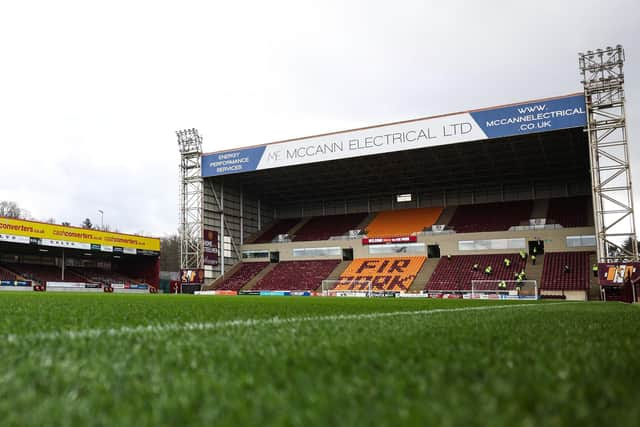
“Therefore, £4m is not a significant undervaluation in the view of the club Board. Many supporters have noted that Fir Park and the playing squad are worth more than £4m. They undoubtedly are – but one of the absolute safeguards in this proposed investment is that Fir Park remains in the club and cannot be sold.
“On a similar point the subject of valuing players when you cannot force them into contract extensions along with the risks around injury etc. is also a significant issue. So, to state that the club is worth much more than £4m by simply aggregating our net assets with a “value” for players is completely wrong. There has also been some correspondence about whether we are effectively debt free as a club. Without prolonging that there are two very clear points to make.
“As previously noted, the very unusual and complex set of accounting entries connected to the Scottish Government Covid Loan create a situation whereby £1.3m of long-term debt does not appear on the club’s balance sheet in its last set of published accounts.
“In calculating the club’s available cash, the details of the component elements of the club’s available cash need to be fully considered. A prime, but not the only, example of this would be that the club’s available cash at the end of every financial year contains the majority of next season’s season ticket sales.
“This ensures the club is in a position to meet all its short-term debts over the summer but to suggest that can be offset against long-term debt in some way is again completely inaccurate.”