

Glasgow is a beautiful city comprised of many different architectural styles and eras - of those eras almost none are more rare and as breathtaking as the buildings constructed during the Georgian era.
The Georgian period is defined as the period around the rule of King George, not just the first though - but the successive rain of King Georges from 1714 to 1837, from King George I right through to George IV.
It’s strongly based on the architecture of ancient Greece and classical Rome. It highly values symmetry - and is identifiable by it’s long, curving terraces - as seen in many West End housing schemes like Park Circus and Park Terrace.
Most of Glasgow’s best and most recognisable architecture isn’t Georgian, it’s Victorian - as much of the Georgian architecture was demolished to make way for the Victorian buildings, warehouses, factories, mills and more to bolster the industrial revolution in the city.
As a result, much of Glasgow’s Georgian architecture is in sparse pockets around the city - in most cases the buildings are just a single Georgian landmark surrounded by more modern tenement housing, factories, or otherwise.
Take a look below for an insight into Georgian Glasgow - some buildings you’ll definitely know, but you might not know their unique history.
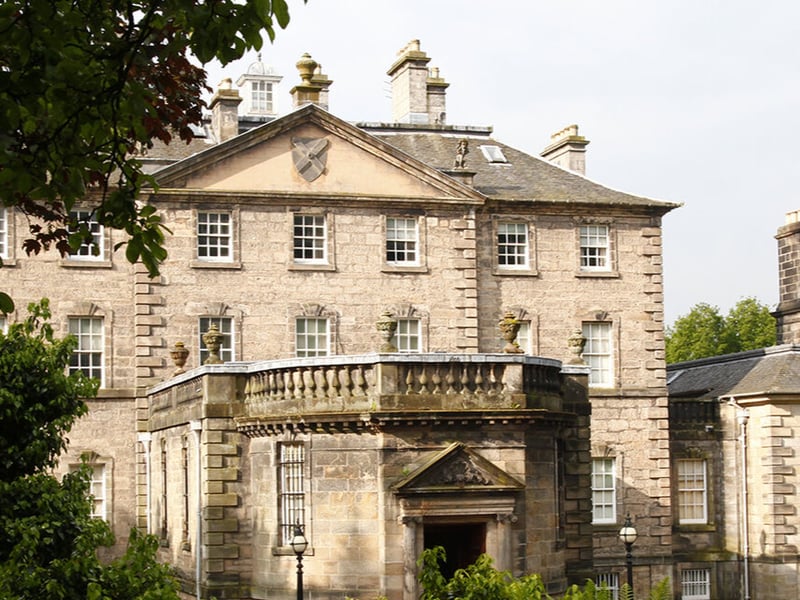
1. Pollok House
Pollok House is regarded as one of Scotland’s grandest and greatest examples of both Edwardian and Georgian architecture. Built in the early Georgian period of 1752, it incorporated many elements of both Edwardian and Georgian architecture. The land has been the ancestral home of the Maxwell family since the 13th century. It’s famous for its striking Georgian architecture, luxurious Edwardian furnishings and world-famous art collection, including masterpieces by El Greco, Blake and Murillo. | National Trust for Scotland
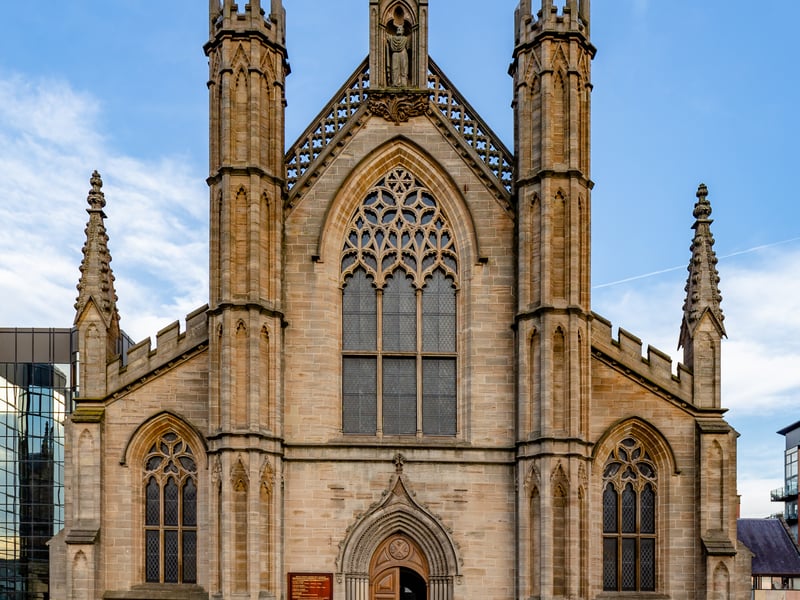
2. Metropolitan Cathedral of St Andrew
Completed in 1816, and designed by James Gillespie Graham (1776–1855), the church of St. Andrew was built in the Edwardian Era in neo-gothic style and formally re-introduced the Roman Catholic presence to Glasgow. The continuing hostility to the Roman Catholic Church in Scotland was evident during the construction of the church: work completed during the day was torn down by saboteurs at night, delaying completion and eventually guards had to be placed on the building site to protect the construction works. However, congregations of other Christian denominations in the city donated money for the completion of the project in a gesture of ecumenism in light of the difficulties faced in construction. The church building is relatively modest in scale, without a steeple or bell tower. This was due primarily to continuing restrictions on the prominence of Catholic places of worship under the Roman Catholic Relief Act 1791, that were not ultimately repealed until the later Roman Catholic Relief Act 1829. | Contributed
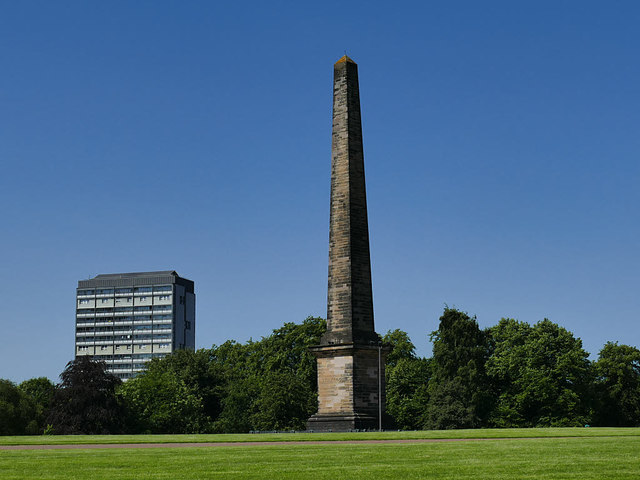
3. Nelson Monument
Less of a building, more of a monolithic obelisk. This grand monument stands at 144 feet tall, and is emblematic of the Georgian era, which gave great weight to statues dedicated to elites. The Nelson Monument was built in honour of Vice Admiral Horatio Nelson, constructed the year after his death at the battle of Trafalgar - the same battle Trafalgar Square in London is named after. Soon after its construction, the obelisk was struck by lightning, leaving a long structural crack in the monument: this event was depicted in a painting by John Knox, which is now in the nearby People’s Palace museum. | Geograph
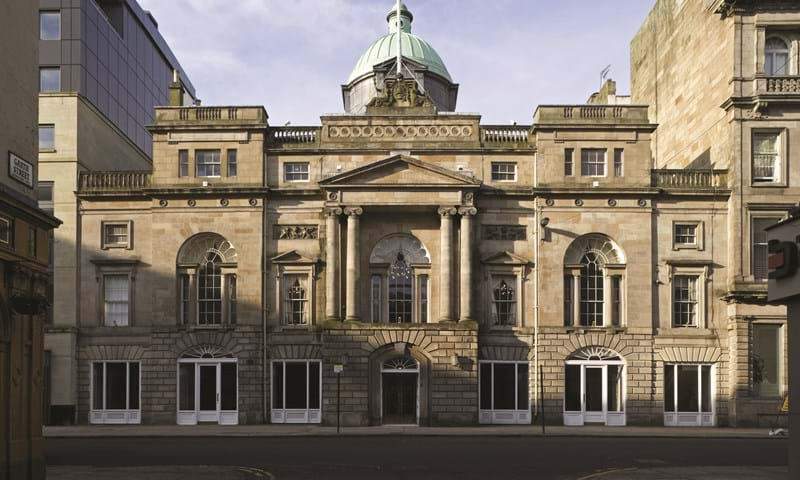
4. Trades Halls
The stunning Trades Hall in the heart of the Merchant City, Glasgow, has been home to Trades House since 1794. Before this the Crafts met in an Almshouse on the corner of Cathedral Street and the High Street, where the Barony Hall of Strathclyde University sits today. Robert Adam was the architect who won the commission in 1791, but sadly died before it was completed. His younger brothers, James and William Adam, saw the building finished. The façade of the Trades Hall is one of Adam’s finest designs, originally comprising of a block of five bays with the emphasis on the central entrance way and outer bays. The cost of completing and furnishing the building was £7,927. It is the only major Adam work surviving in Glasgow, and the oldest building (apart from the medieval cathedral) still used for its original purpose of a public hall. | Contributed