
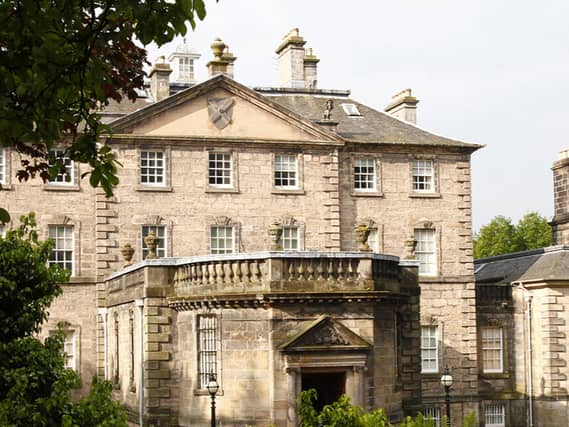


Glasgow is a beautiful city comprised of many different architectural styles and eras - of those eras almost none are more rare and as breathtaking as the buildings constructed during the Georgian era.
The Georgian period is defined as the period around the rule of King George, not just the first though - but the successive rain of King Georges from 1714 to 1837, from King George I right through to George IV.
It’s strongly based on the architecture of ancient Greece and classical Rome. It highly values symmetry - and is identifiable by it’s long, curving terraces - as seen in many West End housing schemes like Park Circus and Park Terrace.
Most of Glasgow’s best and most recognisable architecture isn’t Georgian, it’s Victorian - as much of the Georgian architecture was demolished to make way for the Victorian buildings, warehouses, factories, mills and more to bolster the industrial revolution in the city.
As a result, much of Glasgow’s Georgian architecture is in sparse pockets around the city - in most cases the buildings are just a single Georgian landmark surrounded by more modern tenement housing, factories, or otherwise.
Take a look below for an insight into Georgian Glasgow - some buildings you’ll definitely know, but you might not know their unique history.
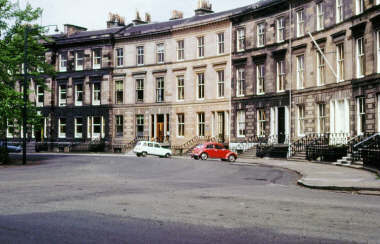
5. Park Circus
Park Circus, like many West End terraced homes, were built in the late Georgian period to the opulent and imposing standards of the time. Much of the West End’s high end housing is Georgian - and you can find probably the highest concentration of Glasgow’s Georgian architecture in the West End, still standing following Glasgow’s industrial revolution. While Park Circus (and Park Terrace) were built in 1850’s, it is still very much in the Georgian style. West End Park, which would soon be renamed to Kelvingrove Park, was also laid out at the same time as the high-end housing scheme. | Virtual Mitchell
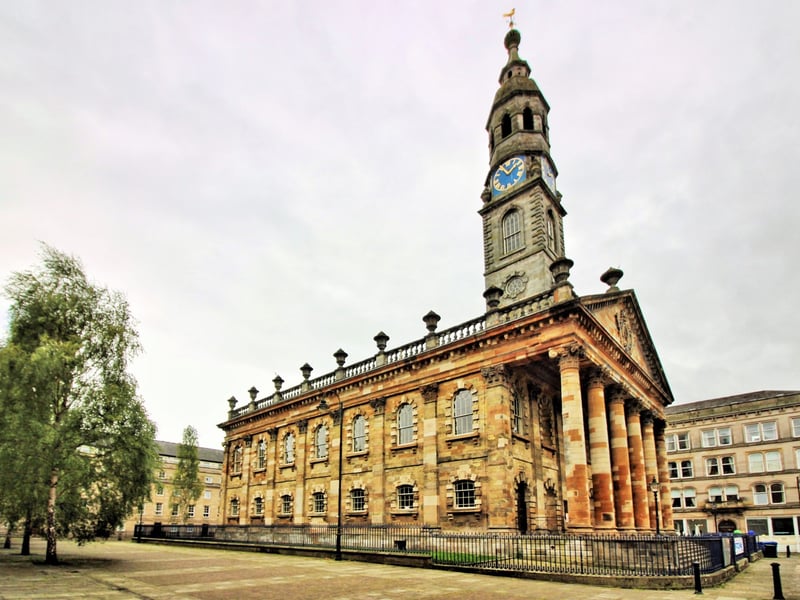
6. St Andrews in the Square
St Andrew’s in the Square is an 18th-century category-A-listed former church in Glasgow, Scotland, considered to be one of the finest classical churches in Scotland. It is now Glasgow’s Centre for Scottish Culture, promoting Scottish music, song and dance. St Andrew’s took a long time to build, but it’s construction began at the very beginning of the Georgian era - the church, inspired by St Martin-in-the-Fields in London, was built between 1739 and 1756 by Master Mason Mungo Naismith, and designed by Allan Dreghorn. It was the first Presbyterian church built after the Reformation, and was commissioned by the city’s Tobacco Lords as a demonstration of their wealth and power. | Contributed
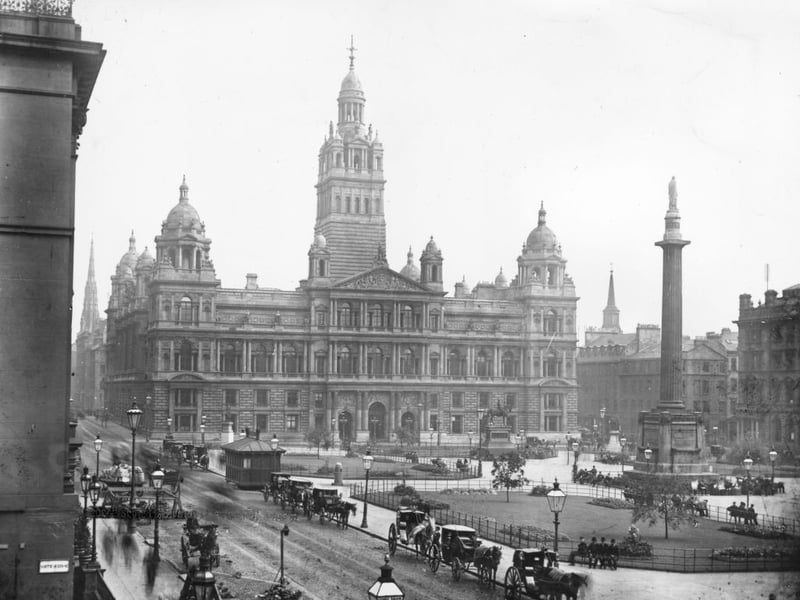
7. George Square
Could you believe it? George Square is Georgian (the hint is in the name). Named after King George III and initially laid out in 1781 but not developed for another twenty years, George Square is surrounded by architecturally important buildings central to the running of Glasgow. The square boasts an important collection of statues and monuments, including those dedicated to Robert Burns, James Watt, Sir Robert Peel and Sir Walter Scott. New streets built alongside George Square (initially called George’s Square) were also named after royalty, including: Hanover street and Frederick street. | (Photo by London Stereoscopic Company/Hulton Archive/Getty Images)