
The story of how a famous painting lost for 400 years worth tens of millions was discovered by accident in Glasgow Museum's Pollok House

The Portrait of George Villiers, 1st Duke of Buckingham was thought lost for 400 years - until it was discovered by chance in Glasgow Museum’s Pollok House
This is the story of how Glasgow Museums found a painting thought lost to time which was worth tens of millions of pounds.
The portrait lay for years in storage in Glasgow’s Pollok House, thought to be merely a reproduction of a lost work from 1625 by Flemish Baroque painter Sir Paul Rubens.
The painting depicts, George Villiers, 1st Duke of Buckingham, a character from 17th century British high society most famously known as James VI’s last lover. He was also noted from politicising with Cardinal Richelieu to use English ships against French Protestants.
It was only in 2017, when the painting had been thought lost for centuries, that it was discovered to be genuine after two months of work removing old varnish and overpainting by art conservator Simon Rollo Gillespie.
The historic artwork was first flagged as being potentially real when Dr Bendor Grosvenor from BBC4’s Britain’s Lost Masterpieces, who suspected that it could be the real deal after seeing it in Pollok House’s gallery while visiting with his wife and daughter as ‘regular punters’.
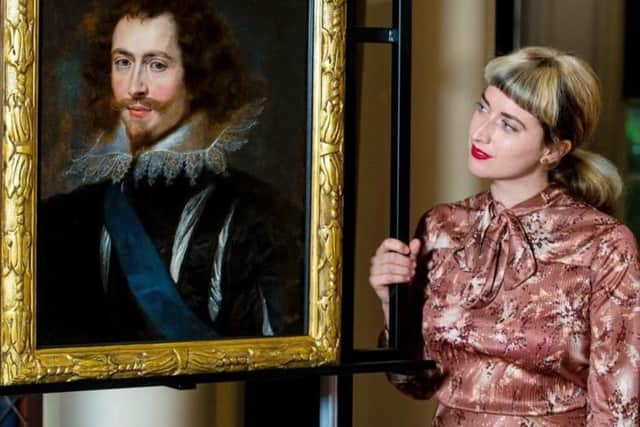

Karen Cornfield, property manager of Pollok House at the time, said: “This is such exciting news for Glasgow and shows what a great eye Sir William Stirling Maxwell had. Pollok House is packed with beautiful paintings that he collected over the years.
“We hope the BBC programme will encourage visitors to come to Pollok, explore the collection and to learn more about the family who brought so many great artworks to Glasgow.”
You can watch the whole story behind the discovery of the painting in the BBC Four show, Britain’s Lost Masterpieces in episode one of series two.
Acquired by Glasgow Museum service once it was gifted to Glasgow Museum service as part of the Stirling Maxwell Collection at Pollok House in 1967, it hung in the dining room of the stately home without much reverence, believed only to be a copy of the original work lost to time.
It appears the Duke of Buckingham painting was purchased in the late 19th century by Sir William Stirling Maxwell, who owned Pollok House.
You can find the painting today hanging in Kelvingrove, alongside the likes of Dali’s Christ of St John of the Cross.
David McDonald, chairman of museums service operators Glasgow Life in 2017, said: “Unsurprisingly, we are beyond delighted to discover the painting is by Rubens, an artist renowned globally as one of the most important painters in history.
“Glasgow is proud of its extensive art collection, considered by many to be amongst the finest in Europe. Glasgow Museums strive to learn more about the artwork in our care and it has been a joy to work with Britain’s Lost Masterpieces to understand much more about this remarkable painting.
“We are excited to give as many people as possible the opportunity to see Rubens’ masterpiece in person. George Villiers, First Duke of Buckingham is sure to become one of the undoubted highlights of any visit to Kelvingrove.”
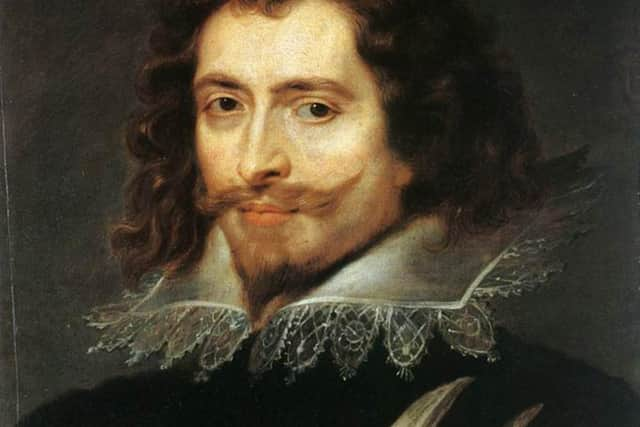
There is no precise estimate available for what the painting might fetch at auction, because it is officially “priceless” and will never be sold according to Glasgow Museums service.
The subject of the painting itself is one of the most prominent gay men in Britain’s history. A lover and consort of James VI and I (same guy, different titles as King of Scotland and England) George Villiers was the Duke of Buckingham and one of the most successful political pundits of the 17th century.
That was until he led a couple of poor military exhibitions, became hugely unpopular, and was assassinated at 35 by miltary man John Felton in a pub in Portsmouth while trying to organise another military campaign.
However as a fictionalised romantic character he appears in Alexandre Dumas’ classic The Three Musketeers (1844), in which he is described as “the handsomest gentleman and the most elegant cavalier of France or England”.