
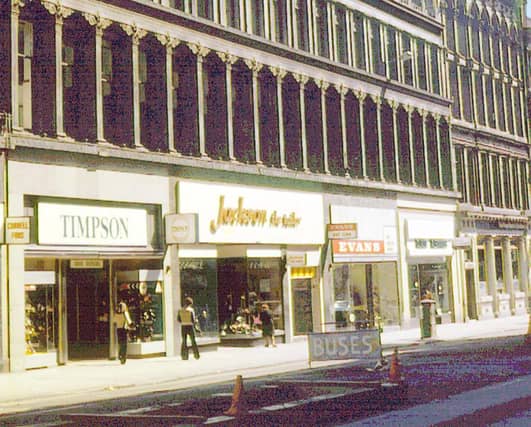


The Victorian era is linked to the 64 year reign of Queen Victoria, from 1837 to 1901.
While the buildings may be imposing and awe-inspiring, they are emblematic of the exploitation rampant in Victorian Society. The labour for most of these buildings were done by exploited people too - such as Glasgow Central Station, which was heavily constructed by displaced Highlanders and Islanders who were forced from their lands and crofts by the British Empire to be used for sheep grazing during the Highland Clearances.
It would be suspiciously convenient for the standing government of the time that the cleared crofters could act as cheap labour for the industrial economy.
Working and living conditions were incredibly harsh for the lower classes in Glasgow - the stark disparity between the upper and lower classes is no more visible than in the great and terrible buildings they created. Workers in Templeton’s Carpet Factory would arrive for a shift in a workplace resembling a Venetian Palace, and then go home to a crumbling over-crowded Gorbals tenement infested with vermin without a toilet or running water.
All that being said, it’s the Victorian architecture of Glasgow that are the most stand-out buildings that define our city on the international stage.
John Betjeman, an English writer and broadcaster, was a staunch defender of Victorian architecture in Britain. Writing in ‘Pavement in the Sun’ in 1967, Jack House gave an account of Betjeman’s first impression of Glasgow.
House wrote: ”The visitor (Betjeman) was so entranced by Victorian Glasgow. ‘The headquarters of the Victorian Society shouldn’t be in London,’ he said. ‘They should be here. This is the greatest Victorian city in the world.”
As shameful as the back-story may be to these buildings, many of them remain incredible additions to the city of Glasgow and it’s people, such as the People’s Palace, Kelvingrove, and Garnethill Synagogue.
Regardless of how we all feel about our Victorian heritage, the buildings certainly tell the history of a rapidly changing and evolving city.
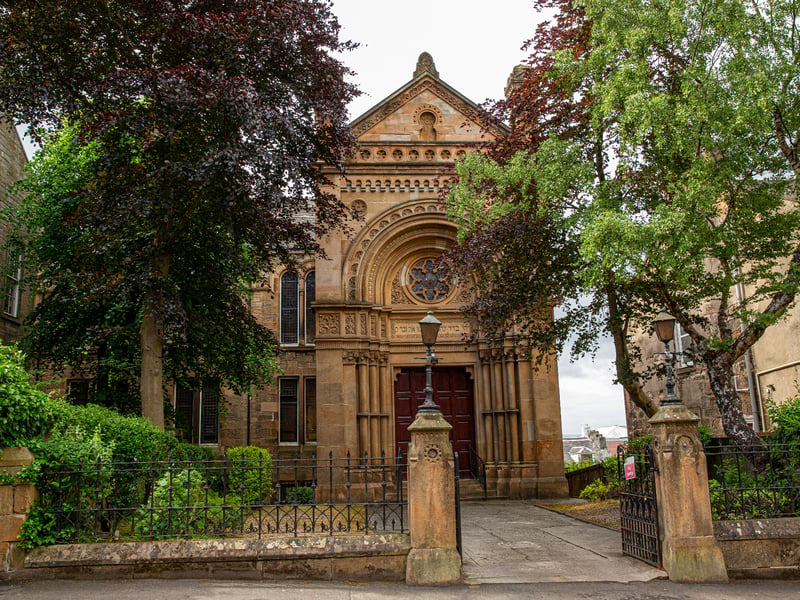
5. Garnethill Synagogue (1879)
Garnethill Synagogue is the first purpose-built synagogue in Scotland - meaning it was the first temple to be built specifically for Jewish Worship - and not a converted church building. The first Jewish community in Glasgow can be traced back to around 1821. By the 1870s, the community numbered around 1,000 and looked to build a permanent synagogue for the first time in Scotland as the converted synagogue in George Street (opened 1858) was full. The synagogue was designed by John McLeod of Dumbarton, in conjunction with London based architect Nathan Solomon Joseph of the United Synagogue. | Contributed
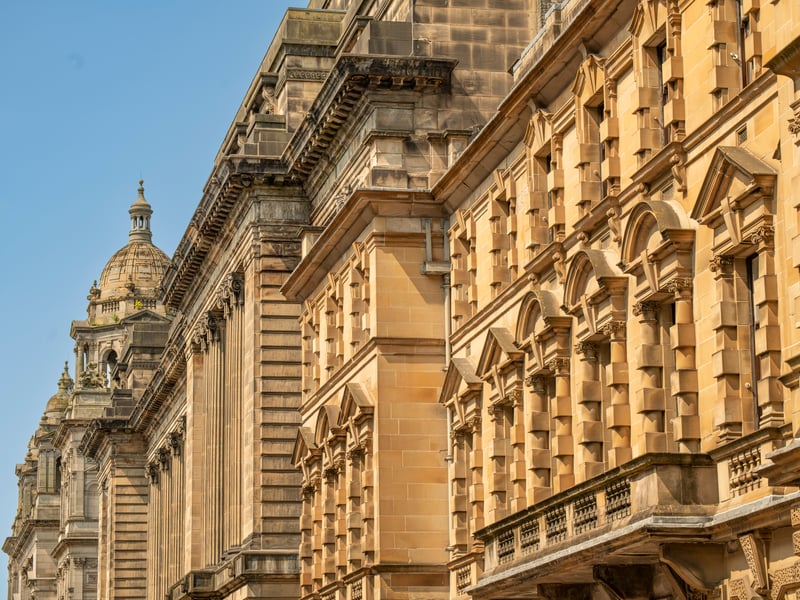
6. Glasgow City Chambers (1888)
The need for a new city chambers had been apparent since the 18th century, with the old Glasgow Tolbooth at Trongate (check our article on Medieval Glasgow for more on that!) becoming insufficient for the purposes of civic government in a rapidly growing city with greater political responsibilities. After 70 years of moving from pillar to post as the city continued to boom throughout the 19th century, the contract to build a new base of operations was awarded to William Young, who designed it in the classic Victorian style on the East End of George Square. | © Glasgow Life / Paul Watt Photography
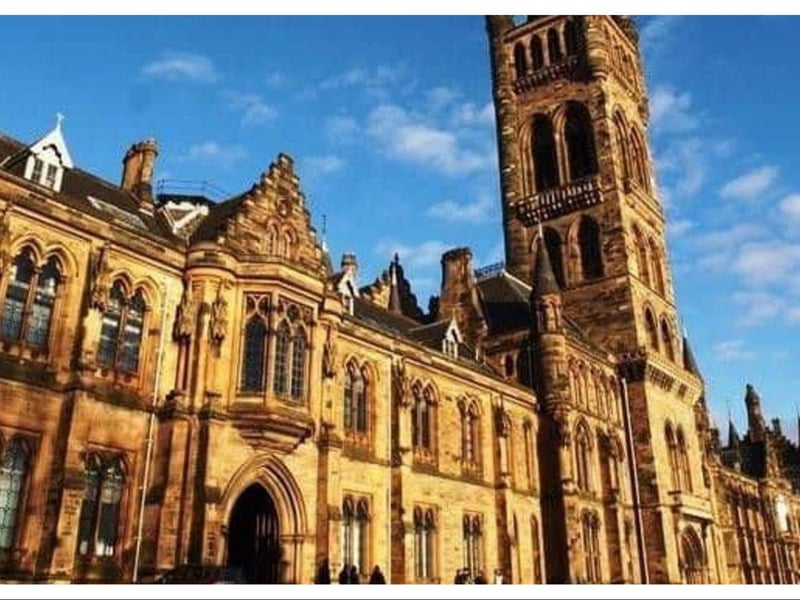
7. University of Glasgow, Gilbert Scott Building (1891)
Reportedly, Alexander Thomson was fuming that he never got awarded the contract for the University of Glasgow after his contributions to the city. Due to internal politics of the time, Sir George Gilbert Scott was awarded the contract. Although he died before the building was finished. His son John Oldrid Scott, a famous architect in his own right, would complete the now iconic building in 1891 that now serves as Glasgow Uni’s main campus. This included the University’s iconic tower, which stands 278 feet high and is one of Glasgow`s most notable landmarks. Photo: Third Party
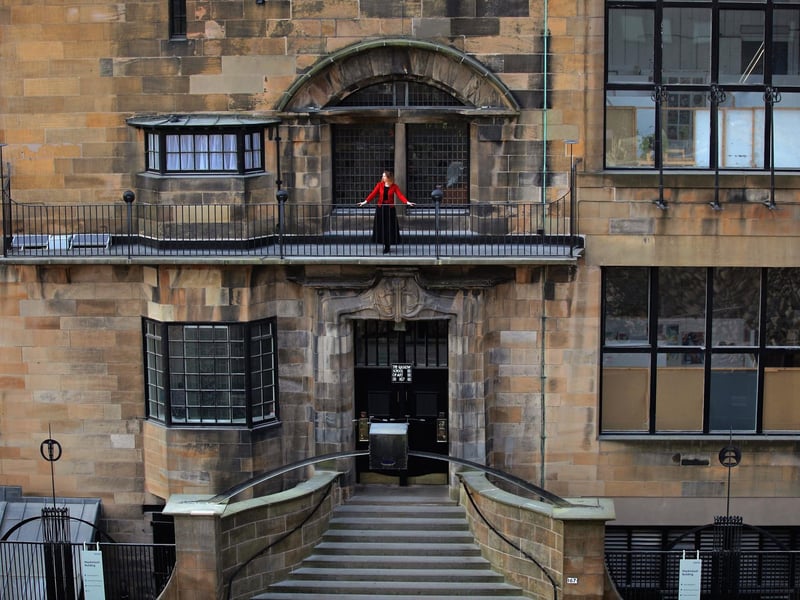
8. Glasgow School of Art (1896)
One of the city’s greatest tragedy’s was the fire at Glasgow School of Art in 2014. An even greater tragedy occurred when it burned down again in 2018. It was an incredibly passionate project for Charles Rennie Mackintosh, who was a massive supporter of the arts in the city. It is highly regarded by architects worldwide for its incredibly innovative and stunning Glasgow Style design. Photo: Jeff J Mitchell