
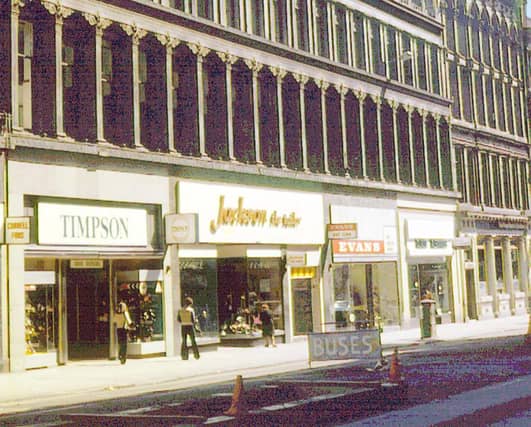


The Victorian era is linked to the 64 year reign of Queen Victoria, from 1837 to 1901.
While the buildings may be imposing and awe-inspiring, they are emblematic of the exploitation rampant in Victorian Society. The labour for most of these buildings were done by exploited people too - such as Glasgow Central Station, which was heavily constructed by displaced Highlanders and Islanders who were forced from their lands and crofts by the British Empire to be used for sheep grazing during the Highland Clearances.
It would be suspiciously convenient for the standing government of the time that the cleared crofters could act as cheap labour for the industrial economy.
Working and living conditions were incredibly harsh for the lower classes in Glasgow - the stark disparity between the upper and lower classes is no more visible than in the great and terrible buildings they created. Workers in Templeton’s Carpet Factory would arrive for a shift in a workplace resembling a Venetian Palace, and then go home to a crumbling over-crowded Gorbals tenement infested with vermin without a toilet or running water.
All that being said, it’s the Victorian architecture of Glasgow that are the most stand-out buildings that define our city on the international stage.
John Betjeman, an English writer and broadcaster, was a staunch defender of Victorian architecture in Britain. Writing in ‘Pavement in the Sun’ in 1967, Jack House gave an account of Betjeman’s first impression of Glasgow.
House wrote: ”The visitor (Betjeman) was so entranced by Victorian Glasgow. ‘The headquarters of the Victorian Society shouldn’t be in London,’ he said. ‘They should be here. This is the greatest Victorian city in the world.”
As shameful as the back-story may be to these buildings, many of them remain incredible additions to the city of Glasgow and it’s people, such as the People’s Palace, Kelvingrove, and Garnethill Synagogue.
Regardless of how we all feel about our Victorian heritage, the buildings certainly tell the history of a rapidly changing and evolving city.
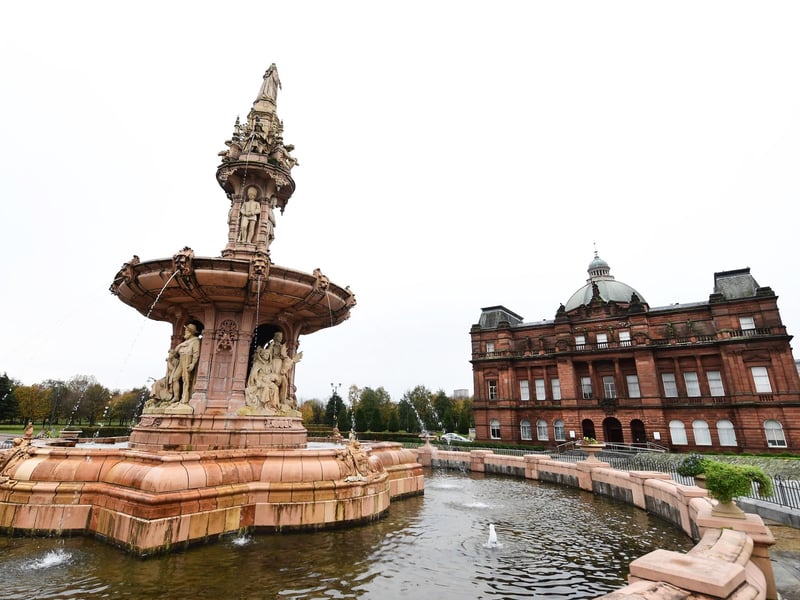
9. People's Palace (1898)
The idea of “palaces for the people” drew on the writings of John Ruskin, William Morris and Annie Besant. At the time, the East End of Glasgow was one of the most unhealthy and overcrowded parts of the city, and the People’s Palace was intended to provide a cultural centre for the people. Upon its opening, Rosebery from the House of Lords described it as: “A palace of pleasure and imagination around which the people may place their affections and which may give them a home on which their memory may rest”. He declared the building “Open to the people for ever and ever”. While you can still visit the people’s palace today, the Winter Gardens have been closed since 2018. Photo: John Devlin