
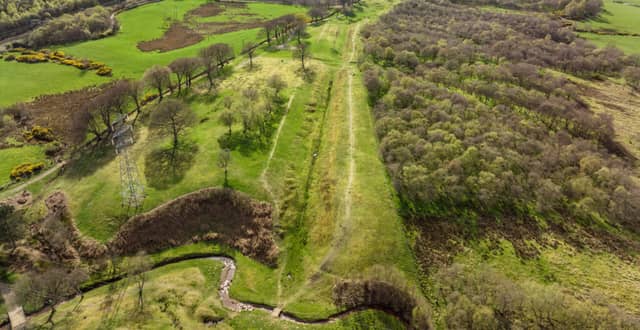


Around 2,000 years ago, the Roman Empire reached its zenith in terms of land expansion, with Glasgow and the central belt marking its very front-most frontier - because of that you can find ancient Roman artefacts buried from Motherwell to Bearsden and everywhere in between.
In this article we're focusing on Roman ruins around Glasgow that left a trace that is visible and accessible today, nearly 2,000 years ago - several old Roman forts and other conurbations were buried long ago under the foundation of Glasgow, Balmuildy Fort south of the River Kelvin is one example - some could even be waiting to be uncovered, like the Bearsden Bath House.
The Antonine Wall is the most significant surviving artefact from the Roman occupation of Scotland - there were 16 forts built along it's 63km span which held a treasure trove of architectural goodies for historians to fawn over.
Take a look below to see the surviving Roman structures and artefacts you can find around Glasgow.
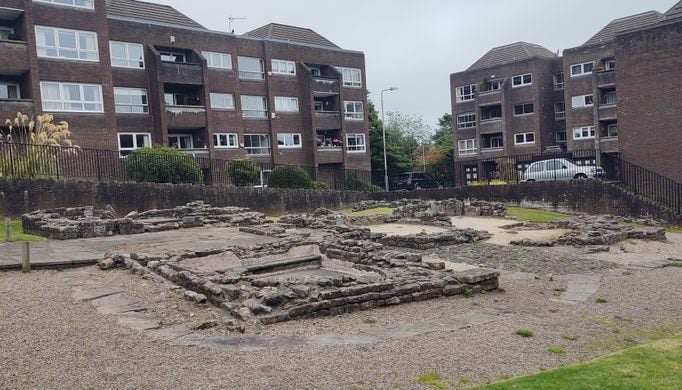
5. Bearsden Roman Bathhouses
Over in, quite literally the middle of Bearsden about 150 metres from the town centre, this bath house was discovered in the early 1970s by builders working on a housing development - hence why it's surrounded by flats. Most of the rest of fort had been built over by that point unfortunately. It's another one of the 16 forts along the Antonine Wall and at the time it was built it was the most complex frontier ever built by the Roman Army. It was the Romans’ last linear frontier, and was only occupied for about 20 years before it was abandoned in the AD 160s. | Historic Environment Scotland
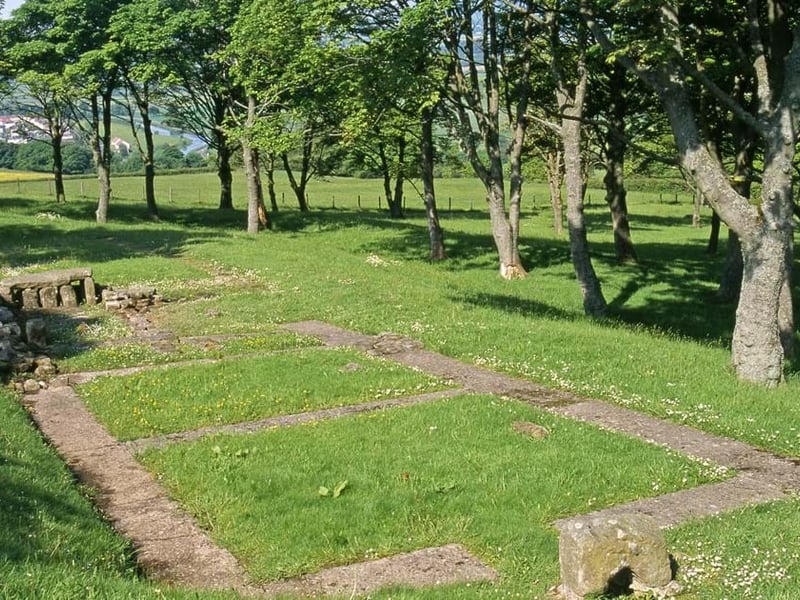
6. Bar Hill Fort
Another one of the 16 forts alongside the Antonine Wall and believed to be the highest. Historians got a serious haul from excavating the area around Bar Hill - including shoes from men, women and children an altar, building columns, wooden beams, part of the pulley of a well, and some coins | Contributed
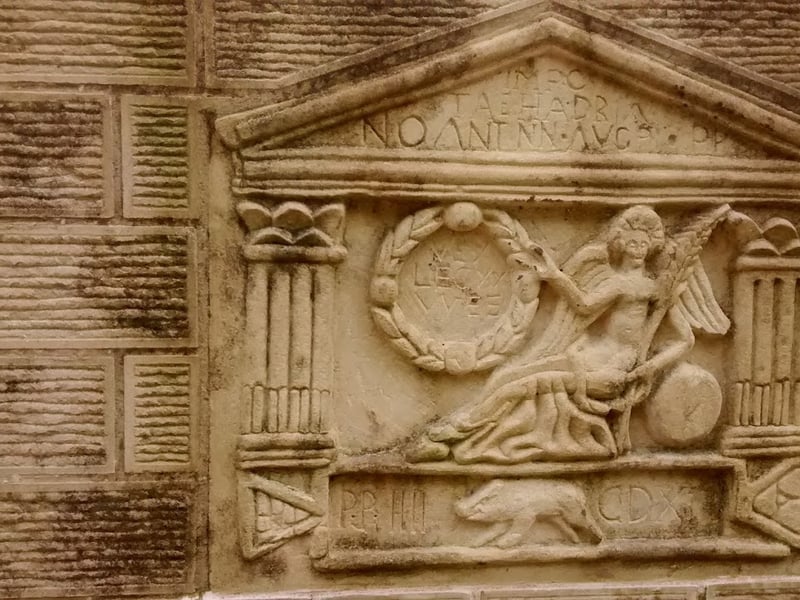
7. Old Kilpatrick
2000 years ago, Old Kilpatrick marked the North West boundary of the Roman Empire - There may have been a harbour here, a supply base for goods brought in by sea. No traces of the fort are visible today but the site of Old Kilpatrick fort - there does remain some significant finds though: two sculptured distance slabs, an inscribed altar to the Roman God Jupiter, and maybe even a bath-house. | Contributed
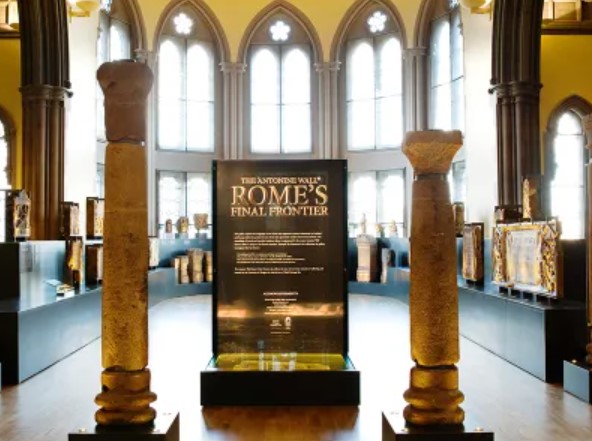
8. The Hunterian Roman collection
The Hunterian holds the largest and most significant collection of Roman artefacts in Scotland. The Roman collection in the Hunterian Museum dates back to the late 17th century, when the third Marquis of Montrose presented a stone made by the Twentieth Legion, found at Old Kilpatrick at the western side of the Antonine Wall, to the Old College of the University of Glasgow. These donations were followed by donations from landowners who found other Roman artefacts on their property in the 18th and 19th century. It also holds artefacts that were found during the construction of the Forth and Clyde Canal. Of the nineteen known 'distance slabs' found along the Antonine Wall - seventeen of them can be found in the Hunterian. You can also peruse the internationally famous collection of Roman Coins held by the founder of the Hunterian, William Hunter. There's also a selection of Roman tombstones and altars. | The Hunterian / University of Glasgow