
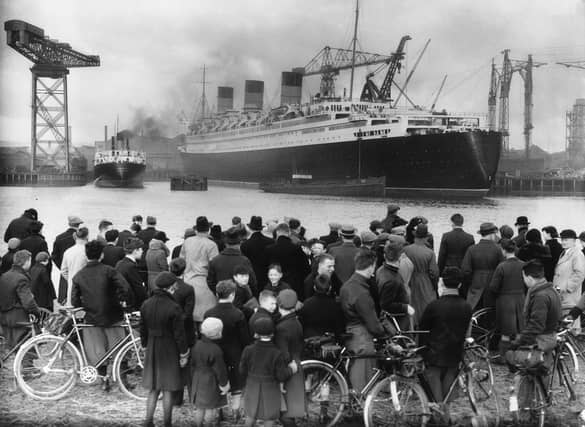


For 250 years, Glasgow was shipbuilding capital of the world - so much so that the term ‘Clydebuilt’ was synonymous with high quality craft across the globe.
Glasgow turns 850 in 2025 - so today we wanted look back at our history with heavy industry through old pictures from the archive.
As Glaswegians, we’re proud of our shipbuilding heritage - there’s not a soul born in Glasgow without some kind of connection to the shipyards, whether that be in riveters, welders, labourers, foreman, or any other trade that kept big steel ships pouring out of the River Clyde. At it’s peak, tens of thousands of people were employed by the shipyards of the Clyde, from Govan all the way to Clydebank, the River Clyde was flanked end-to-end by massive dry docks, towering cranes, and the skeletons of massive steel monoliths sparked together by the people of Glasgow.
Glasgow built the biggest and best ships in the world for most of the 20th century - constructing around a fifth of all ships launched in the early 1900s. Somewhere between 25,000 and 30,000 naval, merchant and passenger ships were built upon the Clyde and its tributaries since the Scott family set up the first shipyard along the River Clyde in Greenock in 1711.
The Clyde’s largest shipyards include John Brown’s shipyard in Clydebank, which constructed some of the largest and most impressive cruise liners of the 20th century in the small humble town, and Fairfield Shipyard in Govan - which many Glaswegians can trace heritage to, given the massive scale of the shipyard.
We can track the prosperity of the the shipbuilding industry by looking at the town of Clydebank - a town which did not exist in 1861, but with the introduction of the shipyard , 40 years later in 1901 it was home to over 30,000 people.
Fairfield Shipyard was founded in 1864 by marine engineer William Elder, who developed the compound engine which offered more efficient use of fuel. The company hit its peak under William Pearce from 1888,and employed 70,000 workers in 19 yards. It was in a Fairfield Yard in Govan that the largest crane in the world was constructed, with a lift capacity of 250 tons.
Although Glasgow seems to get all the credit for the shipbuilding industry - it was a massive collaborative effort from the West of Scotland, from the shipyards of Clydebank and Greenock, to the steel industry of Lanarkshire in Motherwell, Cambuslang, and Coatbridge who supplied the materials to build the huge metal sailing structures.
The steelworks of Lanarkshire were central to the success of the Clyde’s shipbuilding industry, particularly Dalzell in Motherwell and Clydebridge in Cambuslang. Their steel plates formed many of the most famous Clyde ships, including the Lusitania, torpedoed by a German U-boat in 1915 and sparking Britain’s involvement in the First World War.
The end of the Second World War signalled the beginning of the end for the Clyde, and while the shipyards remained open for decades afterwards, it would be in slow decline as Glasgow was forced to compete with emerging industries in Asia.
Thanks to the work of Trade Unionist Jimmy Reid and the formation of the Upper Clyde Shipbuilders (UCS) union, the shipyards managed to float along - but nowhere near to the prolific extent they did prior to the outbreak of the world wars.
Abigail McIntyre, curator at the Scottish Maritime Museum in Irvine, told The Scotsman back in 2016: “The skills, techniques and designs of the Scottish yards were admired and acclaimed around the world and pre-1915 one fifth of all ships in the world were built on the Clyde. The yards undoubtedly reached their heyday at this period.
She added: “Generations of workers lost their profession, their security and their means to provide for their families. However, there is still an immense pride around the history of Scottish shipbuilding, its achievements and innovation had an international impact, and its characters and humour are still celebrated and cherished.”
Now there are only two major shipyards open on the Clyde today, it’s estimated that more than 300 firms have engaged in shipbuilding on Clydeside, of those 300 around 30 to 40 firms were operating at any given time.
Join us as we journey back in time down the River Clyde - taking in over 100 years of shipbuilding in just 30 pictures.
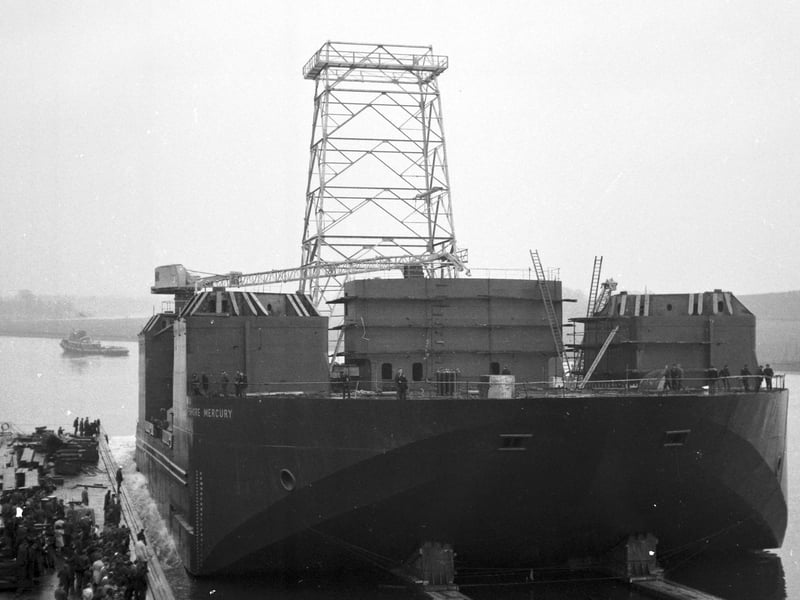
17. Oil Platforms on the Clyde
A floating oil platform/oil rig is launched from John Brown’s shipyard at Clydebank in May 1969. In addition to cruise liners, John Brown’s also constructed a limited run of oil platforms for the North Sea oil industry. Photo: Gordon Rule
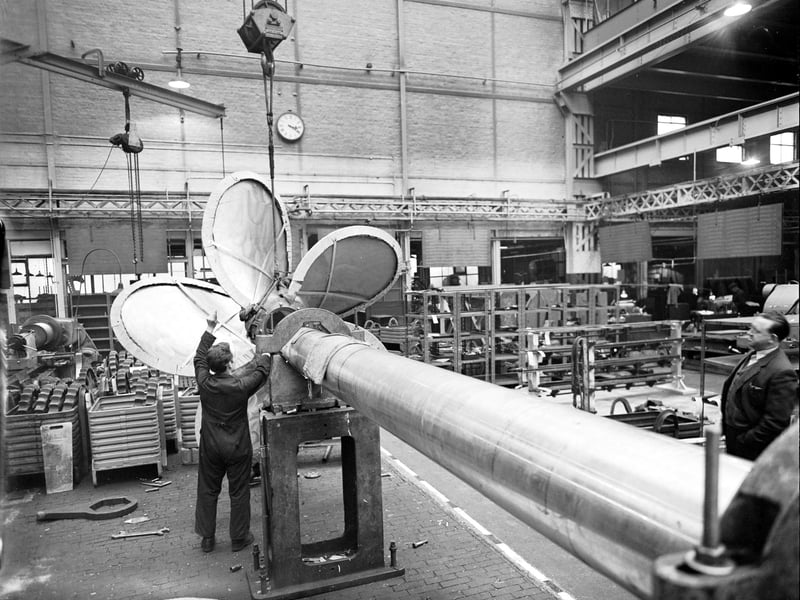
18. Plugging in propellors
A view of the interior of the Yarrow Shipyard at Scotstoun in Glasgow showing a propellor being fitted to a shaft Photo: Unknown
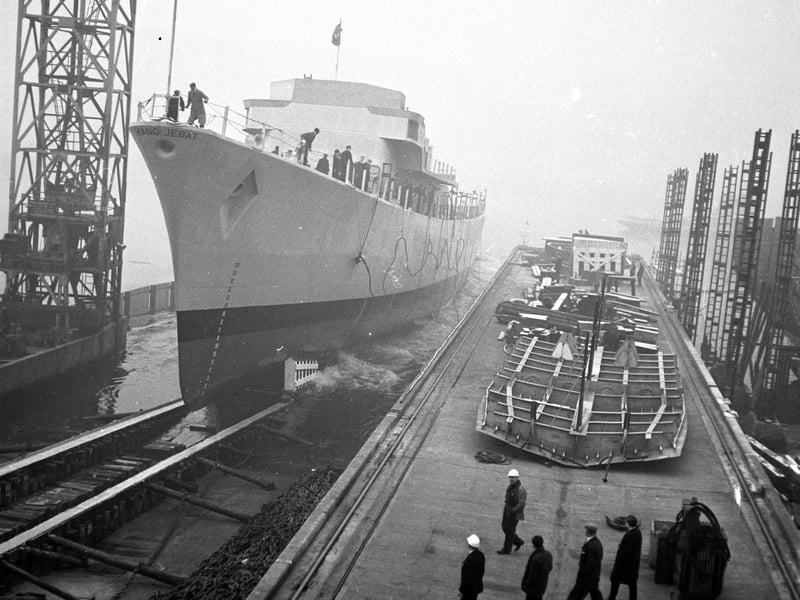
19. Hang Jebat
The Hang Jebat frigate launched at Yarrow’s shipyard at Clydebank in December 1967. Named after a figure in Malaysian folklore, the ship was commissioned by the Royal Malaysian Navy. Photo: Allan Milligan
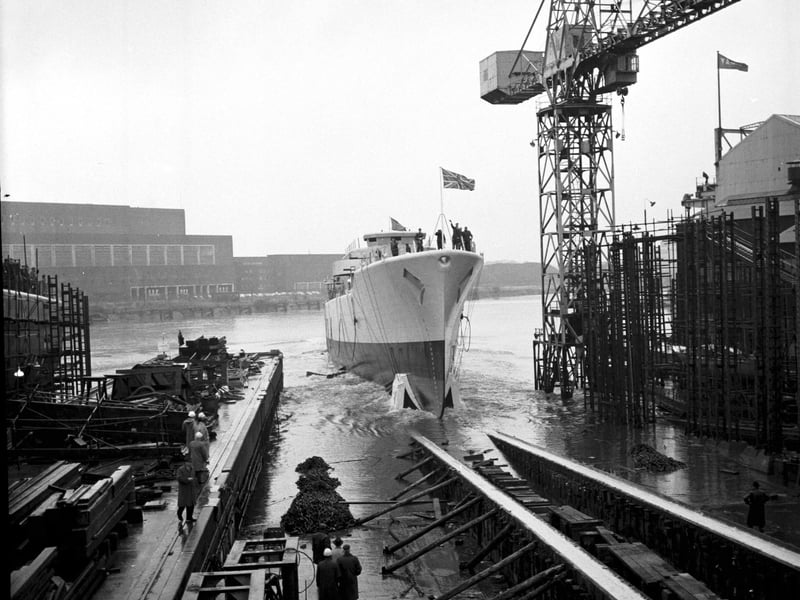
20. HMS Achilles
The HMS Achilles takes to the river Clyde after her launch in November 1968. She was launched on 21 November 1968 and commissioned on 9 July 1970.She was sold to Chile in 1991 and served in the Chilean Navy as Ministro Zenteno. She was washed away from her berth at Talcahuano by a tsunami following the February 2010 Chile earthquake, and ran aground on the coast a few kilometres to the north. Photo: Allan Milligan