

Pollokshaws has a storied and proud heritage - today we wanted to take a look at the local history of the Southside in 8 old images from the archive.
Pollokshaws was originally a village predominantly dedicated to weaving in the 17th century. A group of Flemish weavers were brought to the area in the 19th century by the landowners, the Maxwells of Pollok, on account of their exceptional weaving skills.
Pollokshaws was granted a charter to become a Burgh of Barony in 1812. It became a police burgh in 1858 and remained a burgh of Renfrewshire until 1912 when it was annexed to the City of Glasgow.
Though it had been an industrial area, this changed in 1957 when it was proposed as the second Comprehensive Development Area in Glasgow (the first was Hutchesontown). The area was demolished and rebuilt anew.
The 1960’s regeneration scheme of mainly high-rise buildings has started to make way for new mainly low-rise modern housing - but despite this razing, there’s still plenty of historic buildings that indicate the burgh’s historic past.
Pictures are supplied from the Virtual Mitchell, an open-access archive of old images of Glasgow from across the ages, you can browse thousands of old images of Glasgow by clicking here.
Take a look below as we explore the history of Baillieston in 14 old pictures.
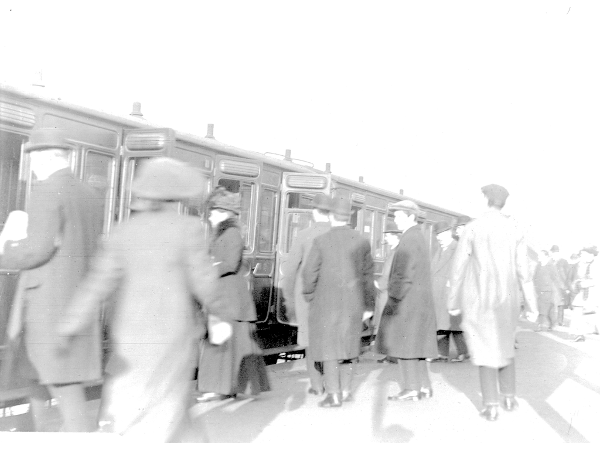
1. All aboard! (1912)
Passengers board coaches at Pollokshaws East Railway Station. | Virtual Mitchell
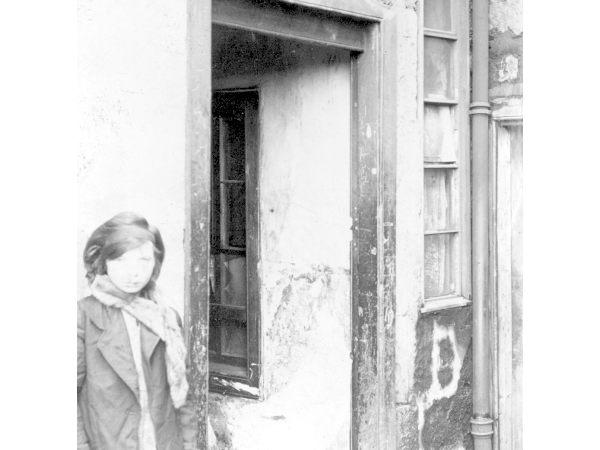
2. Tenement modelling (1920)
A girl poses outside of a slum tenement on Lilybank Place in Pollokshaws | The Virtual Mitchell
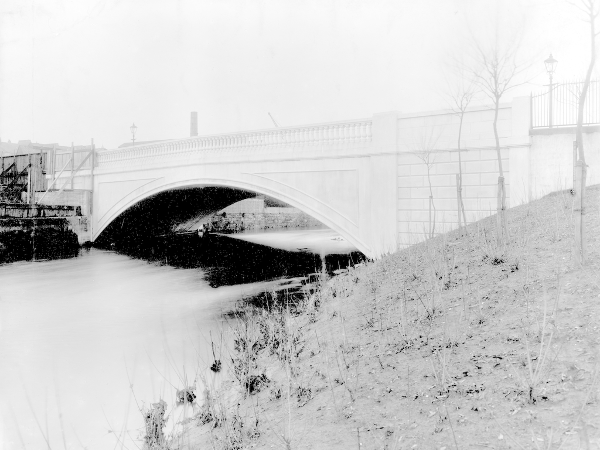
3. Riverford Road (1925)
A bridge over the River Cart | Virtual Mitchell
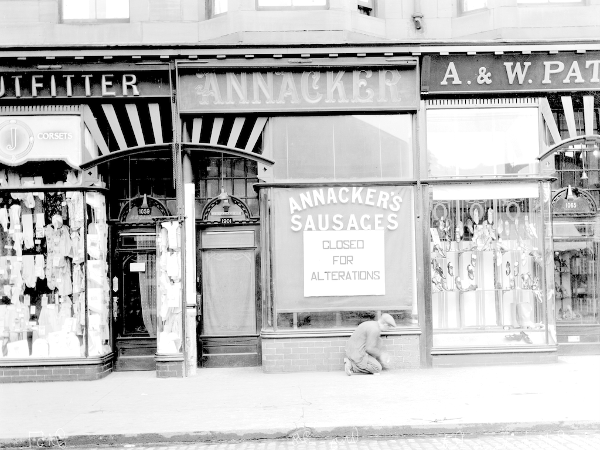
4. Annacker's (1928)
A worker does up a shopfront for Annacker's Sausages on Pollokshaws Road | Virtual Mitchell