
Rangers' Conference League humiliation raises questions over Derek McInnes' future - why it's too soon to wield axe

Why McInnes must be given more time to overcome challenging start to the season
There are defeats, and then there are defeats that change the conversation around a manager. Rangers' Europa Conference League exit to Jablonec in the Czech Republic feels like the latter.
Derek McInnes arrived at Ibrox knowing the size of the task in front of him. He was not taking over an ordinary football club, nor one that would accept a lengthy rebuilding process without demanding immediate evidence of progress. Rangers expect to win. They expect to compete for silverware. And, crucially, they expect to be playing European football after August. Now they will not.
The penalty shootout defeat to Jablonec means Rangers have failed to reach a European league phase for the first time since 2017. That alone is a damaging blow, but the manner of the exit is what makes McInnes' position rather uncomfortable. Rangers held a narrow 1-0 advantage from the first leg, yet could not find a way past a side they should have had sufficient quality to overcome.
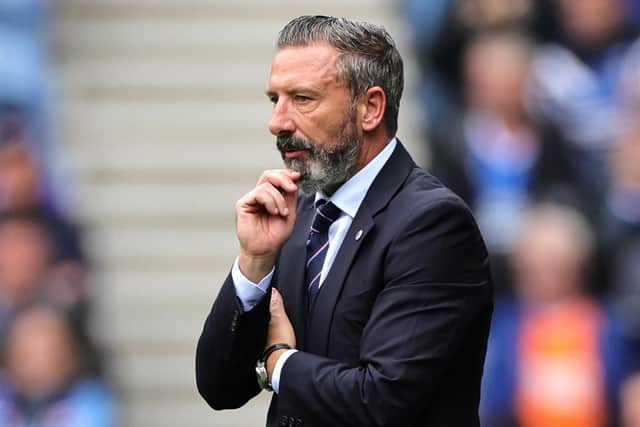

McInnes himself offered no excuses afterwards. In fact, he made the remarkable admission that he was "mortified" by the performance and accepted responsibility for what had unfolded. That honesty is admirable.
But Rangers supporters do not employ managers to provide good post-match interviews. They employ them to produce good football teams. And right now, McInnes has a very difficult argument to make.
The early evidence is grim. Rangers have won only two of their first seven competitive matches in all competitions and are already five points behind Celtic in the Scottish Premiership after just two league games. There has been little consistency, little fluency and, most worryingly, little indication of what this Rangers team is supposed to be.
A manager can ask supporters for patience when they can see a clear plan developing. They can forgive poor results when there is an obvious identity taking shape. They can accept that a new squad needs time when performances suggest the pieces are gradually coming together. At present, Rangers are not offering enough of that reassurance.
Against Jablonec, they looked devoid of ideas for long spells. They had the advantage of knowing exactly what was at stake, had a lead to protect and had already been handed a favourable opportunity to progress. Instead, the game drifted towards extra time and penalties.
Former Rangers midfielder Andy Halliday was scathing in his assessment, questioning the team's style, effort and tactical cohesion while pointing to the number of formations McInnes used during the match. That criticism will sting, but it is difficult to dismiss entirely.
McInnes has made significant changes to the squad. Rangers have already spent heavily and continue to do so - South Korean winger Kim Min-su arrived from La Liga side Girona for £8.5 million during the week and striker Kevin Kelsy is reportedly on his way for £9.5m. The manager hasn't been able to select those two yet but he isn't working with somebody else’s broken squad and no resources. McInnes has been backed. That means responsibility inevitably sits with him.
None of this means Rangers should sack McInnes immediately. In fact, doing so now could create an even bigger mess. He needs more time to establish his squad and implement his methods. A managerial change this early in the season would represent another admission that the club's long-term planning has failed.
But there is a difference between giving a manager time and giving him unlimited time. McInnes now needs results quickly. Sunday's trip to Aberdeen could therefore be far more significant than anyone imagined when the fixture list was released. Rangers cannot afford another poor performance immediately after one of the most embarrassing European nights in recent memory. The pressure will only increase if they stumble again.
The frustrating part for McInnes is that Rangers' European failure removes one of the major opportunities he had to build momentum. A successful run into the Conference League could have provided competitive matches, additional revenue and confidence while allowing the new players to develop together. Instead, there is no European safety net. There is now only domestic football. And at Rangers, that means every game matters.
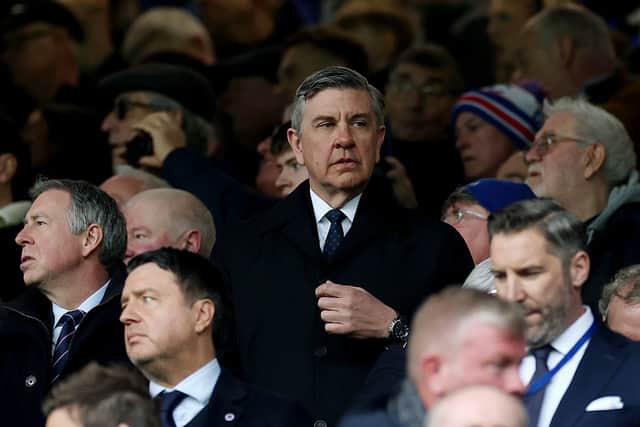
McInnes deserves credit for fronting up to the Jablonec disaster. He did not hide behind injuries, penalties or bad luck. But ultimately, taking responsibility and solving the problem are two very different things. The next few weeks will tell us whether McInnes has the answers. Because after this European exit, his future at Ibrox is no longer simply about patience. It is about proof.
He has to prove this Rangers team can compete. He has to prove the recruitment can work. He has to prove there is a coherent identity underneath the constant changes. And, above all, he has to prove that the Jablonec performance was an aberration rather than a warning.
If Rangers respond strongly, this can become an ugly chapter in the opening months of a new era. If they don't, the questions surrounding Derek McInnes will become much louder — and considerably harder for the Rangers hierarchy to ignore.
*The Scottish Football Social Club is presented by BetSBK.com | 18+ | Gamble Responsibly