
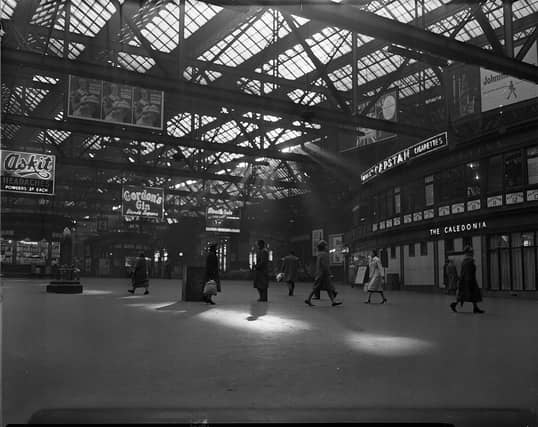


The Post-war years saw Glasgow become one of the most densely populated cities in the world as it reached a population of 1.089 million.
Rationing still remained in effect after the Second World War right up until 1954 with meat being the final item to be derationed. Housing started to rapidly change with some Glaswegian’s moving into the first “skyscrappers” in the city at Moss Heights in 1953 with The Housing (Repairs and Rents) Act being passed the following year which forced local authorities to draw up plans for slum clearances.
One of the highlights of the decade still has a lasting legacy in the city to this do as Dr Tom Honeyman took the brave decision to purchase Salvador Dali’s painting ‘Christ of St John of the Cross’ in 1952 for Glasgow. It was meant with much controvery but remains a standout in the city’s museum collection which has been viewed by millions of visitors for almost 70 years.
Take a look back at Glasgow during the 1950s and have a trip down memory lane.
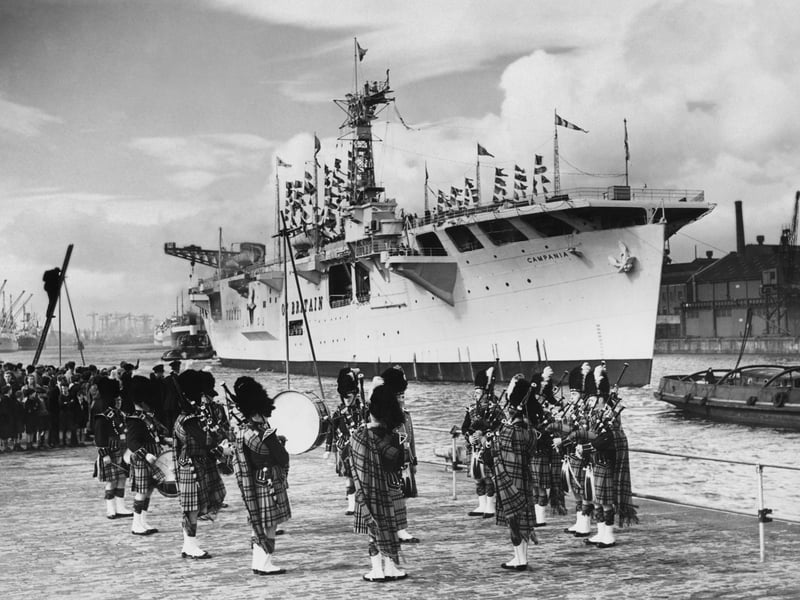
5. Glasgow Corporation Transport Pipe Band 1951
Royal Navy Nairana-class escort aircraft carrier HMS Campania is piped into port by the Glasgow Corporation Transport Pipe Band at the Festival of Britain’s exhibition ship on 19 September 1951 in Glasgow. | Getty Images
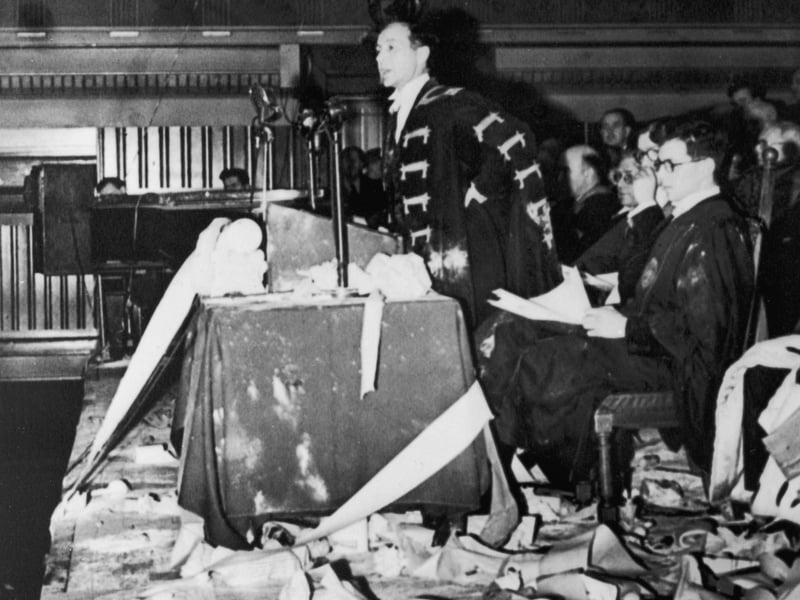
6. St Andrew’s Halls 1951
Scottish Nationalist John MacCormick accepts his installation as Rector of Glasgow University at St Andrew’s Halls, despite being pelted with eggs, flour, tomatoes and soot by the students. | Getty Images
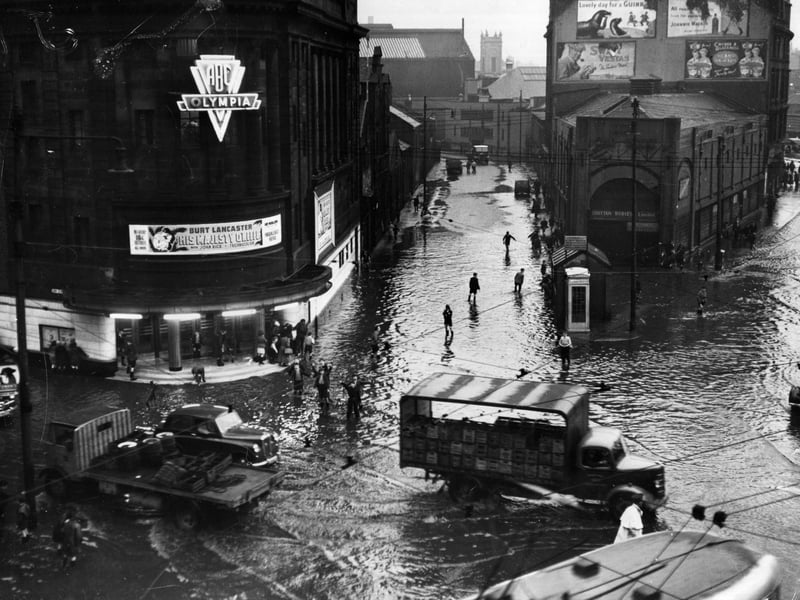
7. Bridgeton Cross 1954
Bridgeton Cross is inundated with floodwaters after torrential rains caused rivers to burst their banks. | Getty Images
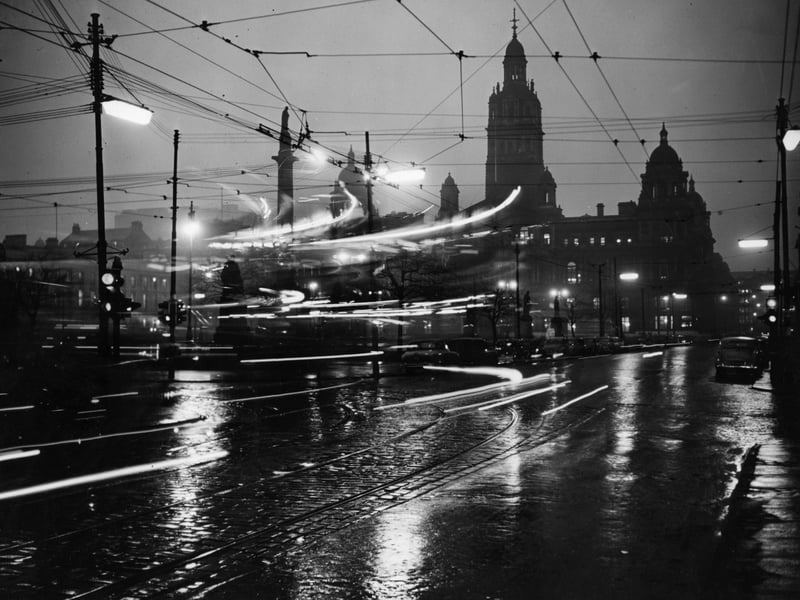
8. George Square 1955
The lights of moving traffic streak past on a rainy night in Glasgow (taken with long exposure). | Getty Images