
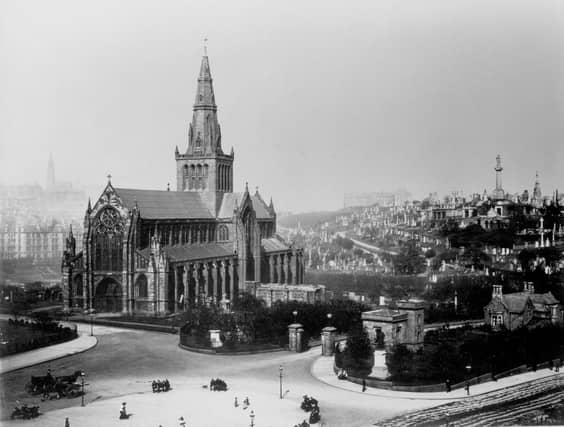


When we think of Glaswegian history, we often think of our proud industrial heritage on the shipyards - sticking together massive hunks of steel and then shipping them out to sea.
But we’d be amiss to forget the older history of Glasgow, of the men and women who built the very foundations of the city around the River Clyde. These ancient old buildings tell a story that can still be seen in the structures down High Street, Glasgow’s oldest road, today.
A new comer to the city might think High Street is nothing special, when in truth its the most historically significant thoroughfare in the city.
While you may pass by any one of these buildings everyday (many of them remain integral to the structure of the city to this day), you may not know the history of the buildings, and how much they contributed to building the city of Glasgow.
It was the cities main street in medieval times, leading from Glasgow Cathedral down past the cross and to the banks of the River Clyde - in the modern day High Street now stops at Glasgow Cross before becoming Saltmarket leading south to the Clyde. It still holds significance today as the boundary between the city centre and the east end.
High Street also used to be the home of the University of Glasgow's Old College, before it moved to the west end in the latter half of the 19th century. So to were the original City Chambers found at the foot of the High Street on Glasgow Cross, before they were moved to George Square.
The industrial revolution moved Glasgow's administrative centres further westward alongside the newly established Merchant City, which itself popped up thanks to transatlantic trade in tobacco, sugar, and slavery.
High Street was left to its own devices, and much of the residents on the road fell into poverty while tenements dropped to slum conditions as the 20th century continued.
For more on the origins of Glasgow's ancient streets, check out our article: The 13 original streets of Glasgow that shaped the city in chronological order.
If you want to find out more about the history of High Street and by extension Glasgow, check out the banner trail set up by Glasgow City Council showcasing the areas rich heritage - you can find out more by clicking here.
Join us as we explore the origins of Glasgow in eight structures still standing around High Street to this day.
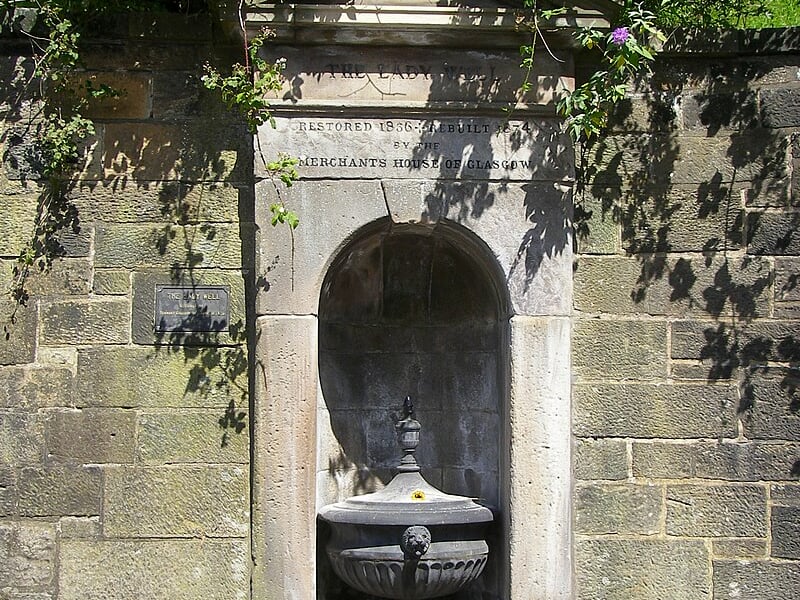
5. Ladywell Spring
The Ladywell spring near Duke Street, was restored by the Merchants House in 1835 and 1874. The Ladywell spring was a natural spring, now at the foot of the Necropolis. Originally it would have been used by pilgrims and travellers entering the city from the Eist Brig or East Bridge. The Lady well was one of sixteen public wells in existence in 1726 and continuously used until 1820. The spring is noted on early city maps and can be reliably assumed to predate the city. | Wikipedia
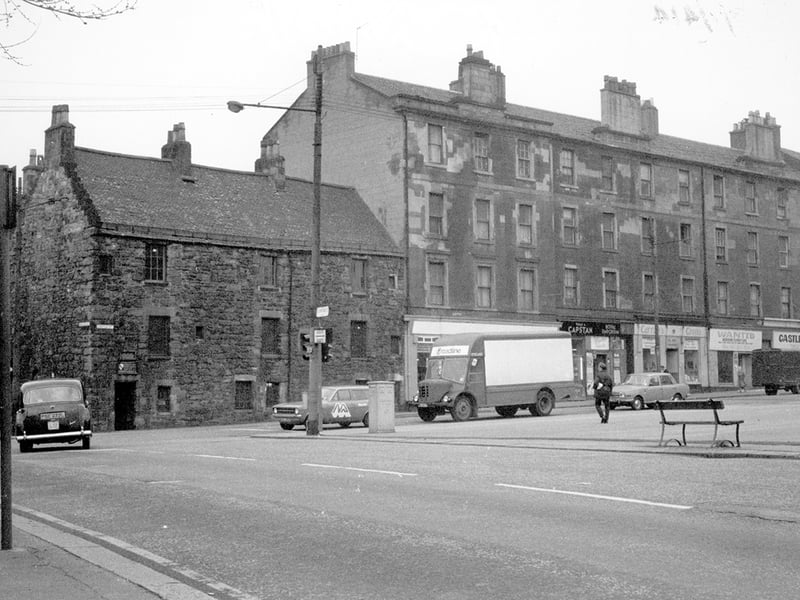
6. Provand’s Lordship
The Provand’s Lordship on Castle Street pictured in March 1976. The building dates back to 1471 and is one of only four medieval buildings left in Glasgow. The manse was built about 1471, by Andrew Muirhead (Bishop of Glasgow from 1455-73), whose Coat of Arms can be seen on the southside of the building. | Virtual Mitchell
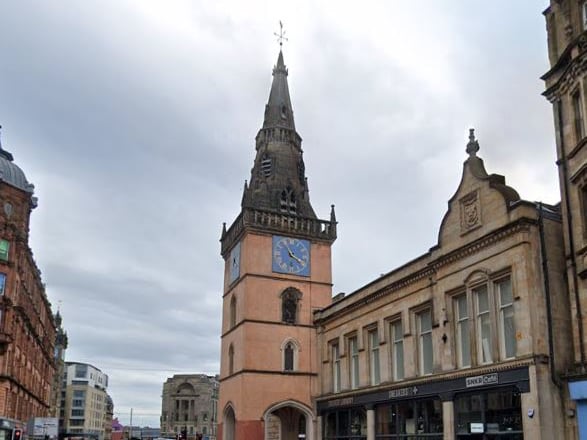
7. Tron Steeple
The Tron steeple wasn't always attached to a theatre. Originally it was part of a late medieval place of worship called the Church of St Mary and St Anne - which was destroyed by fire in 1793. If you think it stands out from the rest of the buildings on the Trongate you'd be correct - it's built in the gothic style, which is pretty recognisable if you look closely at the peak of the steeple. | Contributed
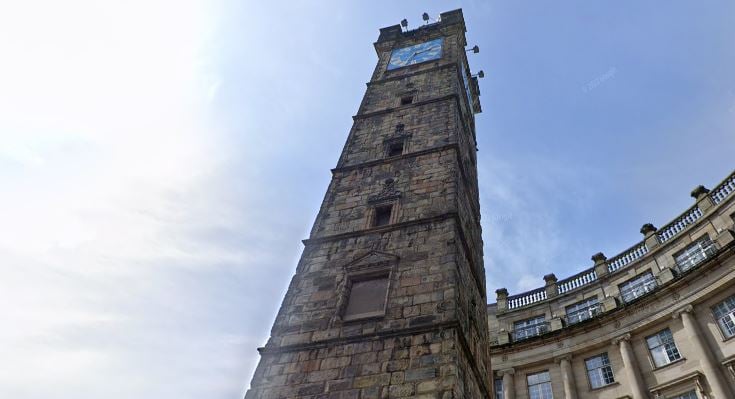
8. Tolbooth
All that remains of the old Tolbooth is it’s steeple, but before the old Tolbooth, there was an even older Tolbooth in the same location. In 1626, the new Tolbooth was built, it was a very impressive stone building five storeys high, with small windows, which looked onto the Trongate. The Tollbooth was not just used as an administrative centre but as a prison for those accused of crimes. The prisoners would have been led to their rooms by a narrow turnpike stair in the Tolbooth steeple. The seven story steeple, which survives today, would have stood at the east of the building. | Canva Pro/Getty Images