

It’s hard for most of us Glaswegians to remember what happened 10 years ago, never mind 110 years ago - that’s why today we wanted to look back in history to see how much has changed since then.
1914 was a pivotal year not only for Glasgow but for Scotland and of course the world as a whole, when the First World War was initiated by the United Kingdom declaring war against the German Empire.
Like most Britons, very few Glaswegians saw the First World War coming - but they would play a massive role in the historic war, both in the trenches and on the home front - the induction of areas like Govan, Partick, and Pollokshaws in 1912 brought a massive new populous to the city, making it the second biggest city in the UK after London with a population of over 1 million.
A few months before the outbreak of war, in July 1914, King George V visited the city to see Fairfield’s shipyard in Govan to witness the construction of battleships like the Valiant, which would play a huge role in the war. The shipyards output increased massively during the war, and really put Glaswegians mettle (and metal) to the test.
Countless Glaswegians would die in the war, with many exhibiting massive feats of bravery, like one Private Henry May, who was little more than a foot soldier with the 1st Battalion of the Scottish Rifles at La Boutillerie, where he was awarded the Victoria Cross for rescuing wounded soldiers.
Outwith the war, many different historical moments took place here in Glasgow, such as the inauguration of Govanhill Baths, a massive moment in our cities social history, and revolutionary socialist trailblazer, John Maclean, holds his first anti-war rally on Glasgow Green.
Take a look below as we look at life in the city during 1914 - and how much Glasgow has changed in the last 110 years.
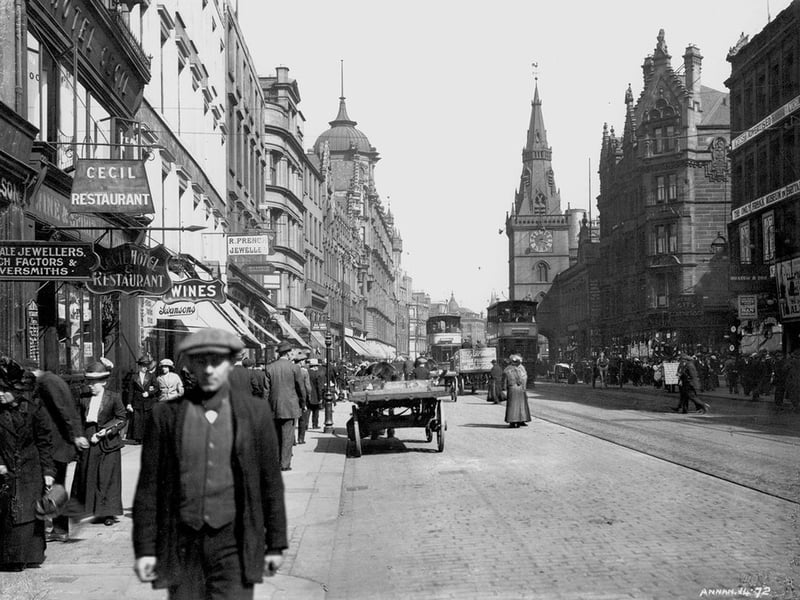
1. A view of Trongate (1914)
A busy day on Trongate in 1914 | Glasgow City Archives
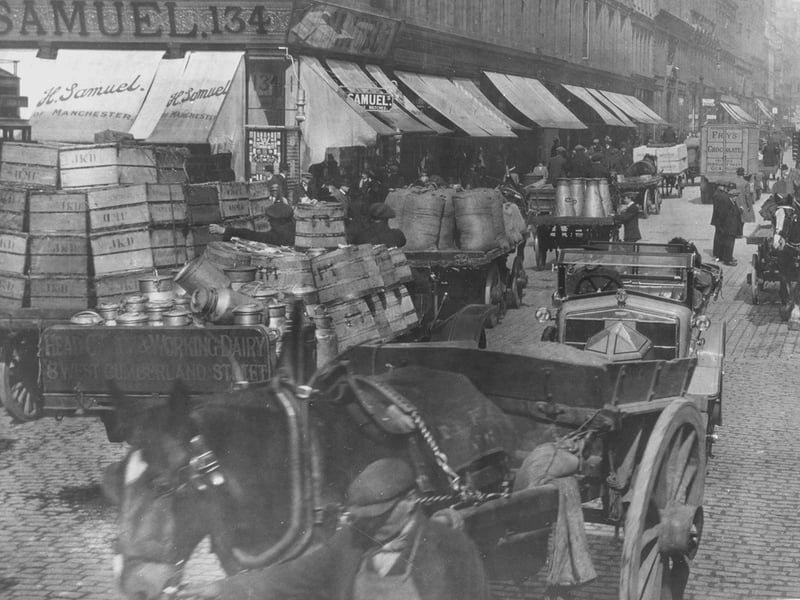
2. Buchanan Street (1914)
Horses and carts on the corner of Buchanan Street and Argyle Street in the early 20th century. | Glasgow City Archives
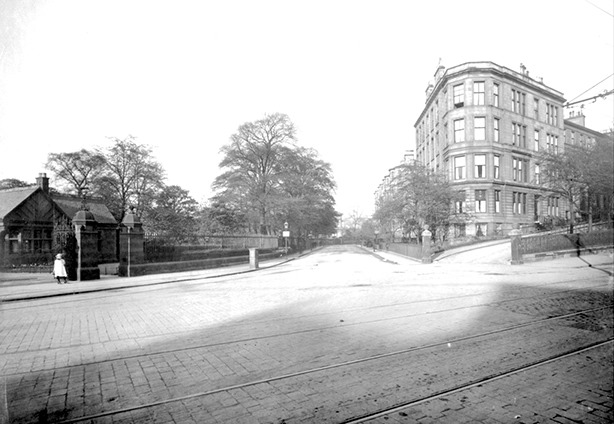
3. Queen Margaret Drive (1914)
A view down Queen Margaret from Great Western Road in the early 20th century. | Glasgow City Archives
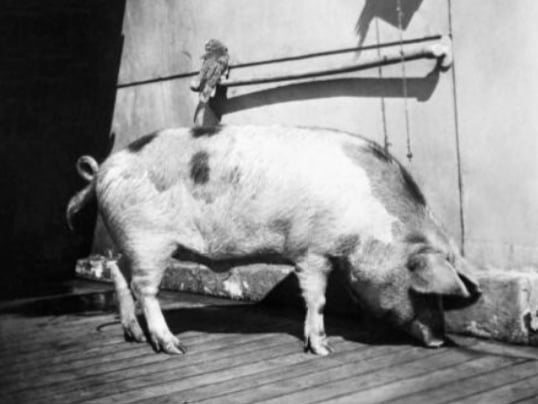
4. Tirpitz
Tirpitz never set foot on Glasgow soil, instead he was onboard the Clydebuilt ship - the HMS Glasgow - after it sunk a German ship at the Battle of the Falkland Islands in 1914. Pigs were kept onboard war ships to provide fresh meat for crewmates - though Tirpitz escaped this fate, somehow getting above-deck and out to sea after a German ship was scuttled. He was saved by two British sailers, not after nearly drowning one of them, and served onboard the HMS Glasgow for a year, now not as meat, but as a mascot. He was awarded an Iron Cross for his service. | IWM