
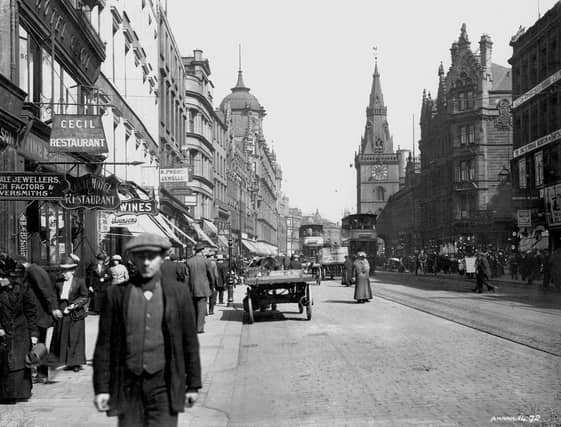


It’s hard for most of us Glaswegians to remember what happened 10 years ago, never mind 110 years ago - that’s why today we wanted to look back in history to see how much has changed since then.
1914 was a pivotal year not only for Glasgow but for Scotland and of course the world as a whole, when the First World War was initiated by the United Kingdom declaring war against the German Empire.
Like most Britons, very few Glaswegians saw the First World War coming - but they would play a massive role in the historic war, both in the trenches and on the home front - the induction of areas like Govan, Partick, and Pollokshaws in 1912 brought a massive new populous to the city, making it the second biggest city in the UK after London with a population of over 1 million.
A few months before the outbreak of war, in July 1914, King George V visited the city to see Fairfield’s shipyard in Govan to witness the construction of battleships like the Valiant, which would play a huge role in the war. The shipyards output increased massively during the war, and really put Glaswegians mettle (and metal) to the test.
Countless Glaswegians would die in the war, with many exhibiting massive feats of bravery, like one Private Henry May, who was little more than a foot soldier with the 1st Battalion of the Scottish Rifles at La Boutillerie, where he was awarded the Victoria Cross for rescuing wounded soldiers.
Outwith the war, many different historical moments took place here in Glasgow, such as the inauguration of Govanhill Baths, a massive moment in our cities social history, and revolutionary socialist trailblazer, John Maclean, holds his first anti-war rally on Glasgow Green.
Take a look below as we look at life in the city during 1914 - and how much Glasgow has changed in the last 110 years.
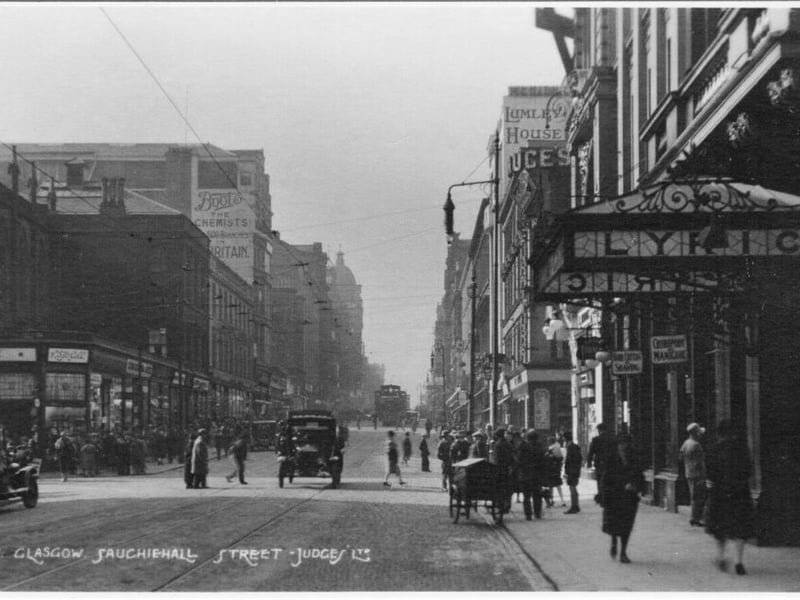
5. The Royalty Theatre
The wealthy merchants living in villas along Sauchiehall Street needed some entertainment - and by the 1870’s theatres began to spring up. The Royalty Theatre, Glasgow (later the Lyric Theatre) was one of the first built on the corner of Sauchiehall Street and Renfield Street in 1879. The Royalty staged plays, opera, and musical comedy and later became home to repertory theatre until it became the Lyric Theatre in 1914 when it was sold to the YMCA. It was rebuilt after a fire in 1953 but was demolished in 1959, and replaced by St. Andrew House, a large concrete office block, which is now a hotel. | archive
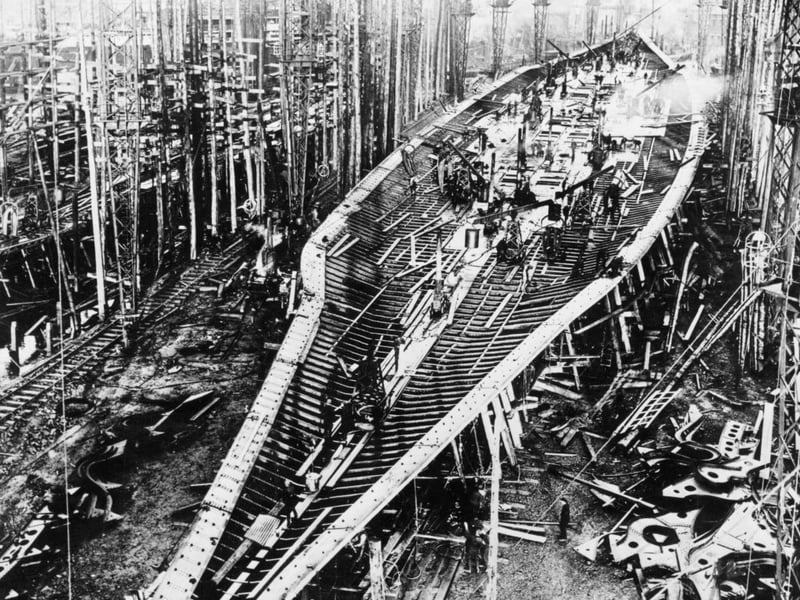
6. 1914: The Aquitania is launched from Clydebank
The Cunard luxury liner ‘Aquitania’ under construction at John Brown & Company’s shipyard at Clydebank near Glasgow. The Aquitania took three years to build and was launched in 1914 weighing 45,647 gross tons. The last of the Atlantic four-stackers, she went on to become the longest-serving ship this century, retiring after 35 years of service which included war duty as an armed merchant cruiser, a troopship and a hospital. Shipyards dominated Clydebank and led to rapid industrial growth until demand faltered and the area’s economy slumped in 1931 with unemployment levels reaching 65%. | Getty Images
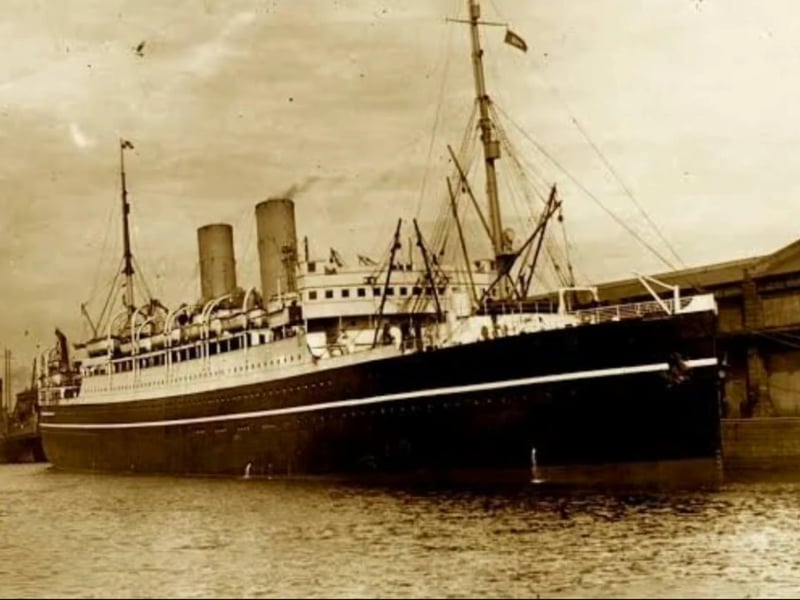
7. SS Metagama
The SS Metagama was a transatlantic ocean liner owned by the Canadian Pacific Railway Company, it was built in Glasgow in 1914 and eventually scrapped by 1934 following the Great Depression. The ship could accommodate 1,654 passengers and achieve speeds of up to 16 knots. It was used during the First World War and, luckily, managed to avoid the fate that befell her sister ship, the SS Missanabie. The sister ship was torpedoed by a German submarine in 1918 towards the end of World War One. After the war, the SS Metagama became known as an immigrant ship and famously accommodated the mass emigration of Scottish youths to Canada in 1923. Photo: YouTube Screenshot via TRANSATLANTIQUES
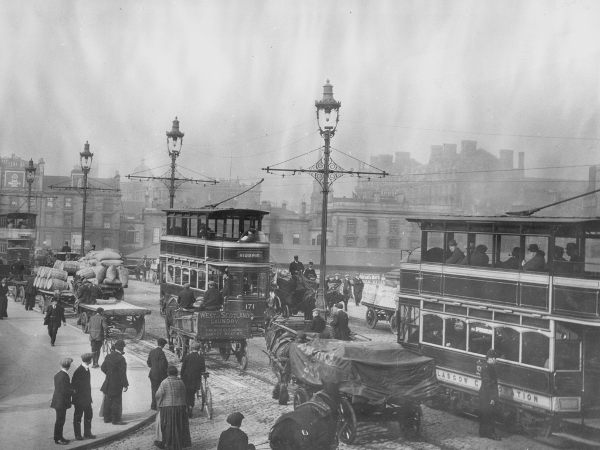
8. Glasgow Bridge, 1914
Glasgow Bridge looking north in 1914.png | Virtual Mitchell